
Stainless Steel and Duplex Steel Material Selection Strategy for Chemical Equipment: Medium Compatibility and Cost Analysis
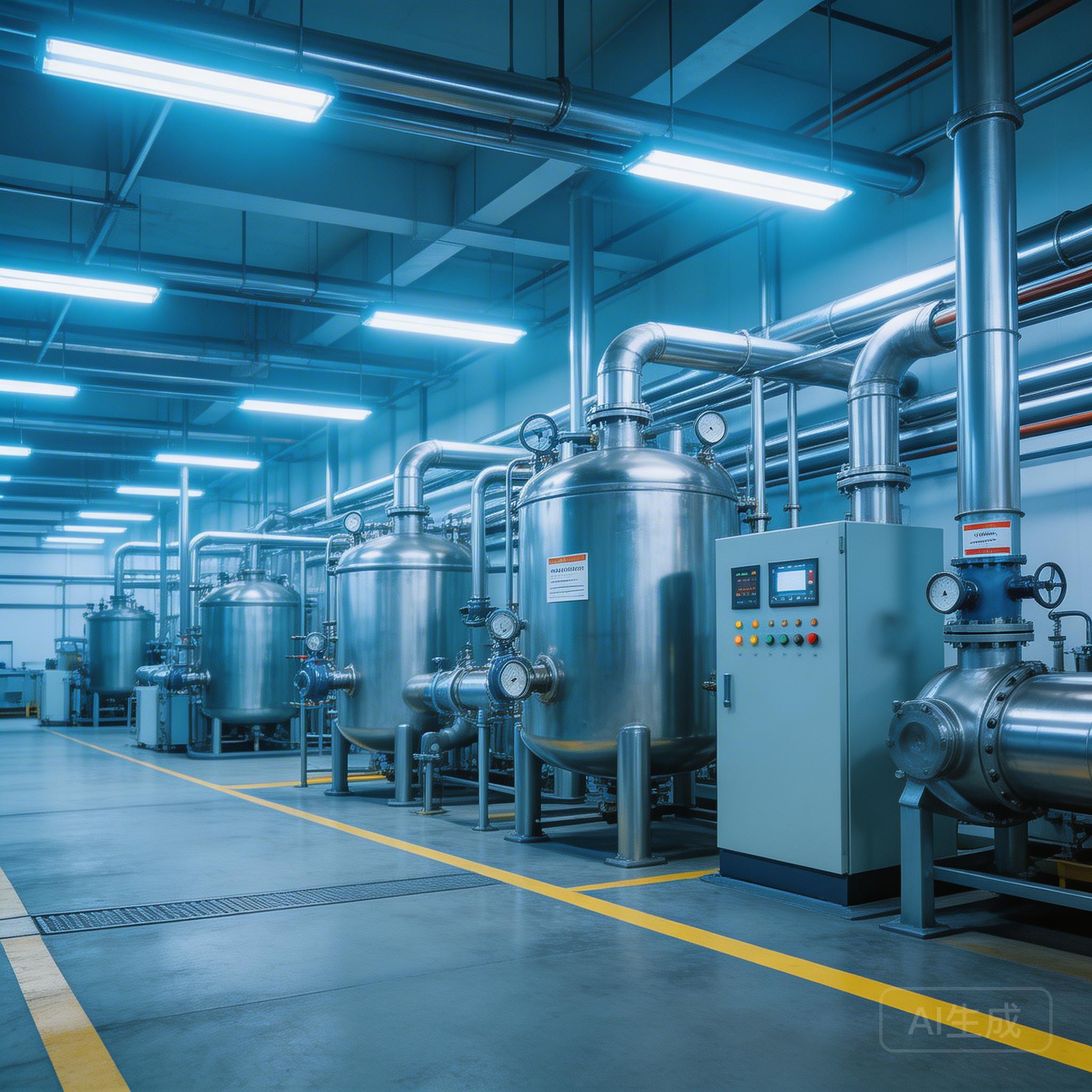
Modern chemical equipment factory with complex piping systems
Introduction: The Importance of Material Selection for Chemical Equipment
In the chemical industry, the correct selection of equipment materials is directly related to production safety, equipment lifespan, and operating costs. Stainless steel and duplex steel, as two commonly used materials in chemical equipment, each have their unique performance characteristics and application scenarios. This article will deeply analyze the material selection strategies of these two materials in chemical equipment, focusing on the balance between medium compatibility and cost-effectiveness.
Chapter 1: Application of Stainless Steel in Chemical Equipment
1.1 Advantages of Austenitic Stainless Steel
Austenitic stainless steel (such as 304, 316L) is widely used in chemical equipment due to its excellent corrosion resistance, good processability, and relatively low cost:
Key Features:
- Corrosion Resistance: Performs well in most weakly corrosive media
- Processability: Easy to weld, form, and machine
- Cost Advantage: More competitive pricing compared to duplex steel
Chapter 2: Application of Duplex Steel in Chemical Equipment
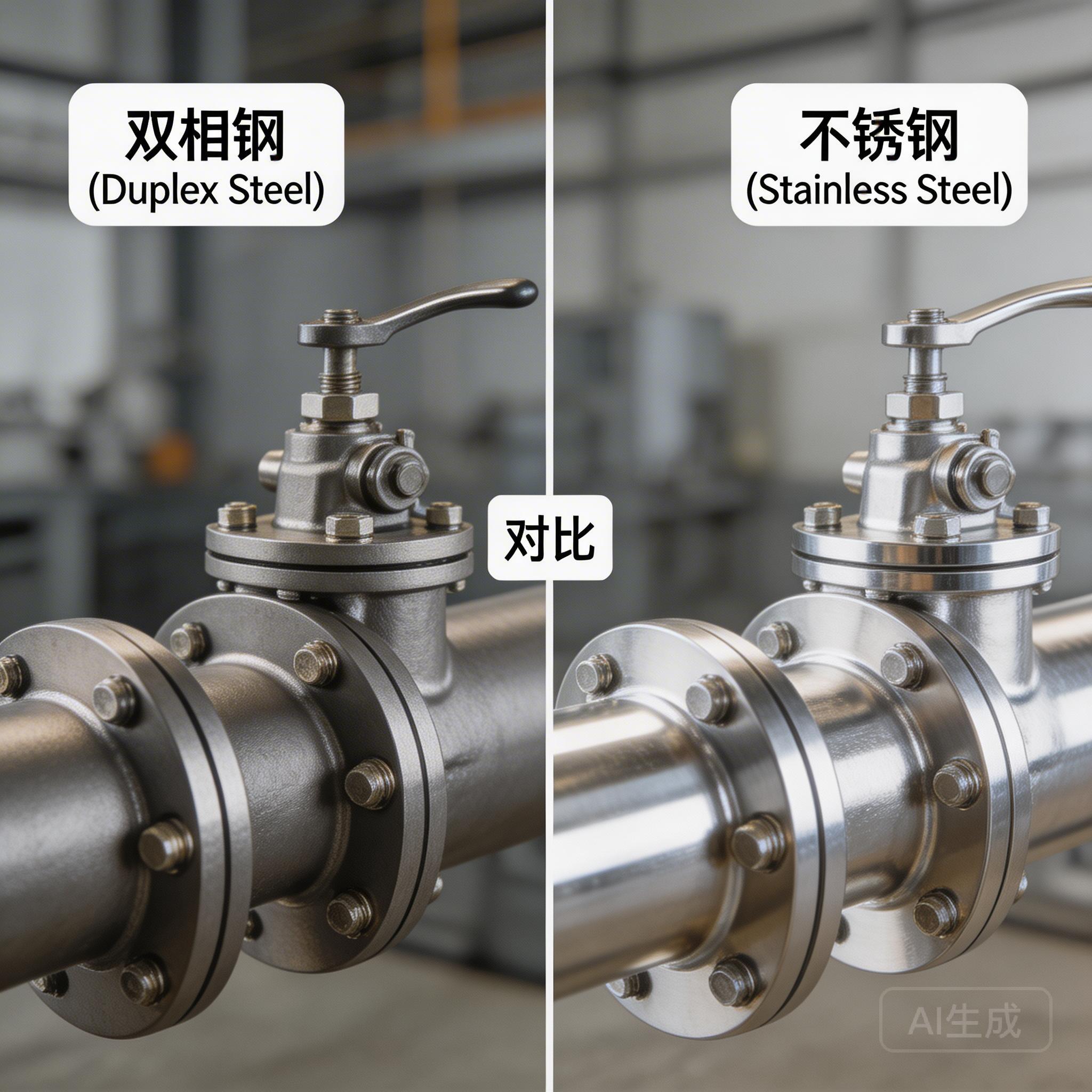
Chemical equipment piping system, stainless steel and duplex steel material comparison
2.1 Unique Advantages of Duplex Steel
Duplex steel (such as 2205, 2507) combines the advantages of austenitic and ferritic stainless steel, performing exceptionally well in harsh chemical environments:
Key Performance:
- High Strength: Yield strength is twice that of ordinary stainless steel
- Excellent Corrosion Resistance: Pitting Resistance Equivalent Number (PREN) ≥ 34-40
- Stress Corrosion Cracking Resistance: Performs excellently in chloride-containing environments
Chapter 3: Medium Compatibility Analysis
3.2 Material Selection Guide
| Medium Type | Recommended Material | Notes |
|---|---|---|
| Weak acid (pH > 4) | 316L Stainless Steel | Temperature < 80°C |
| Strong acid (pH < 4) | 2205 Duplex Steel | Consider temperature effect |
| Chloride-containing solution | 2507 Duplex Steel | Monitor chloride concentration |
| Alkaline solution | 304/316L | Generally applicable |
| Organic solvent | 316L Stainless Steel | Consider solvent type |
Chapter 5: Material Selection Decision Process
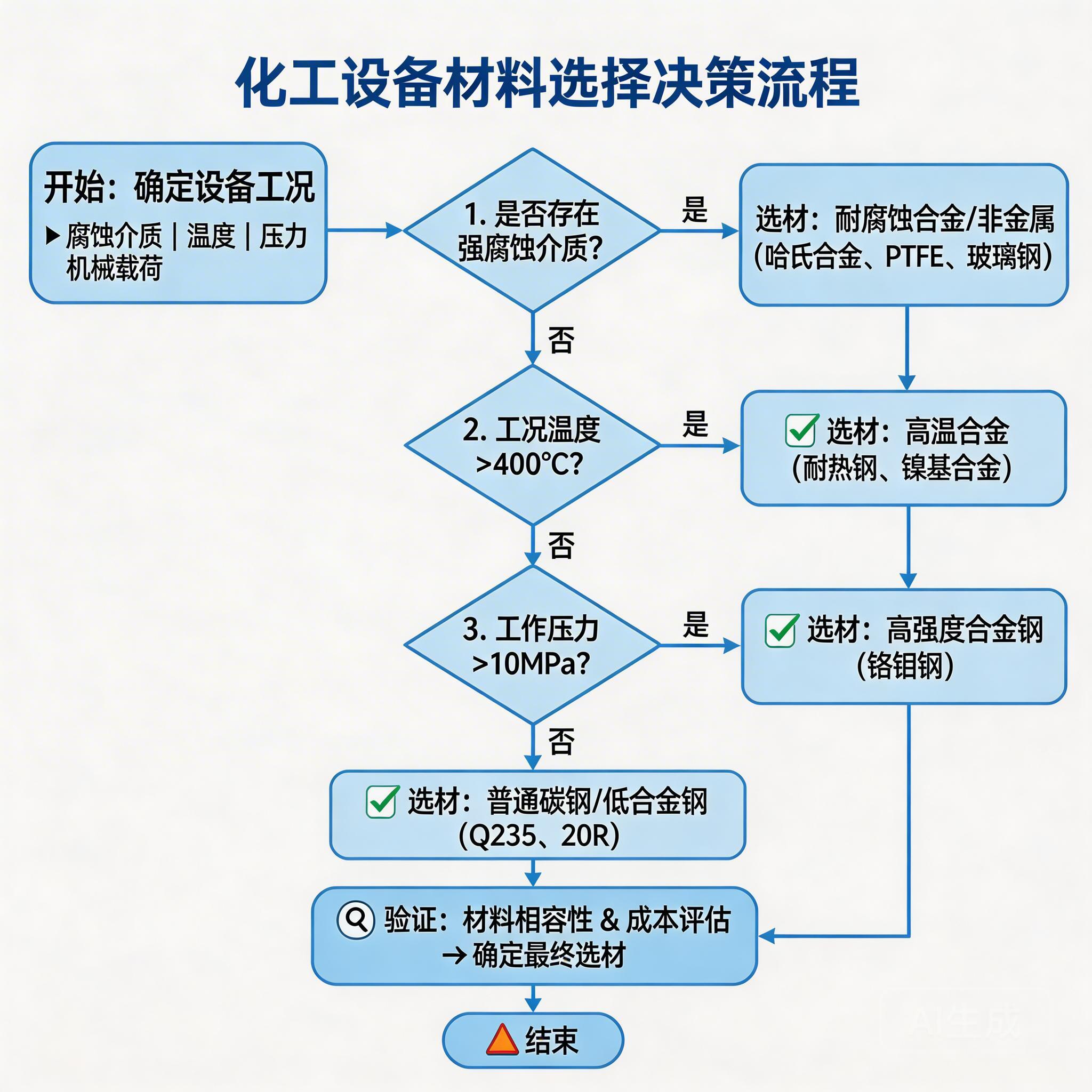
Chemical equipment material selection decision flow chart
5.1 Systematic Material Selection Approach
Four-Step Decision Process:
Step 1: Medium Analysis
- Determine chemical medium composition and concentration
- Analyze operating temperature and pressure
- Evaluate pH value and redox potential
Chapter 6: Professional Solutions from Zhejiang Jiaji Forging
Zhejiang Jiaji Forging Co., Ltd. was established in 2010, located in Wenzhou, China. We are a professional manufacturer of forged flanges and high-pressure socket weld fittings. We are committed to becoming a global expert in fluid system connection solutions, always prioritizing quality.
Product Advantages:
- Complete Material Range: Austenitic stainless steel, duplex steel, nickel alloys fully covered
- Quality Certifications: ISO 9001, PED AD 2000 certified
- Technical Support: Professional material selection guidance, customized solutions
PED AD 2000
Conclusion: Scientific Material Selection Creates Value
The correct selection of chemical equipment materials is a systematic project that requires comprehensive consideration of medium characteristics, operating conditions, cost-effectiveness, and safety requirements. Stainless steel and duplex steel each have their applicable scenarios, and the key is to make scientific decisions based on specific working conditions.
Core Recommendations:
- Mild Environments: Prioritize stainless steel to control costs
- Harsh Environments: Choose duplex steel to ensure reliability
- Key Equipment: Adopt high-performance materials to reduce risks
- Total Life Cycle: Comprehensively consider all cost factors