
Zhejiang Jiaji Forging Co., Ltd., a leading ISO-certified custom forging manufacturer in China, provides expert guidance on selecting the optimal flange material for demanding industrial applications, from offshore platforms to high-temperature petrochemical plants.
| Supplier | Country | Key Products | Certifications | MOQ |
|---|---|---|---|---|
| Jiaji Forging | China | Duplex/Super Duplex, Nickel Alloy, Stainless Steel, Custom Forged Flanges | ASME, ASTM, API 6A, ISO 9001, PED 2014/68/EU, DNV, ABS | 1 Piece (Custom) |
| ThyssenKrupp Materials | Germany | Carbon & Alloy Steel Flanges, Large Diameter | PED, AD2000, ISO 9001 | Varies by project |
| Metal Industries | USA | ASTM A105 Carbon Steel, ASTM A182 F316 Stainless Flanges | ASME, API, NORSOK M-650 | Typically 10+ pieces |
| JSW Steel | India | Carbon Steel Flanges, Petrochemical Grade | ISO 9001, IBR, PED | Project-based |
| Sandvik Materials | Sweden | High-Performance Stainless & Nickel Alloy Flanges | PED, NACE MR0175, ASME | High-volume orders |
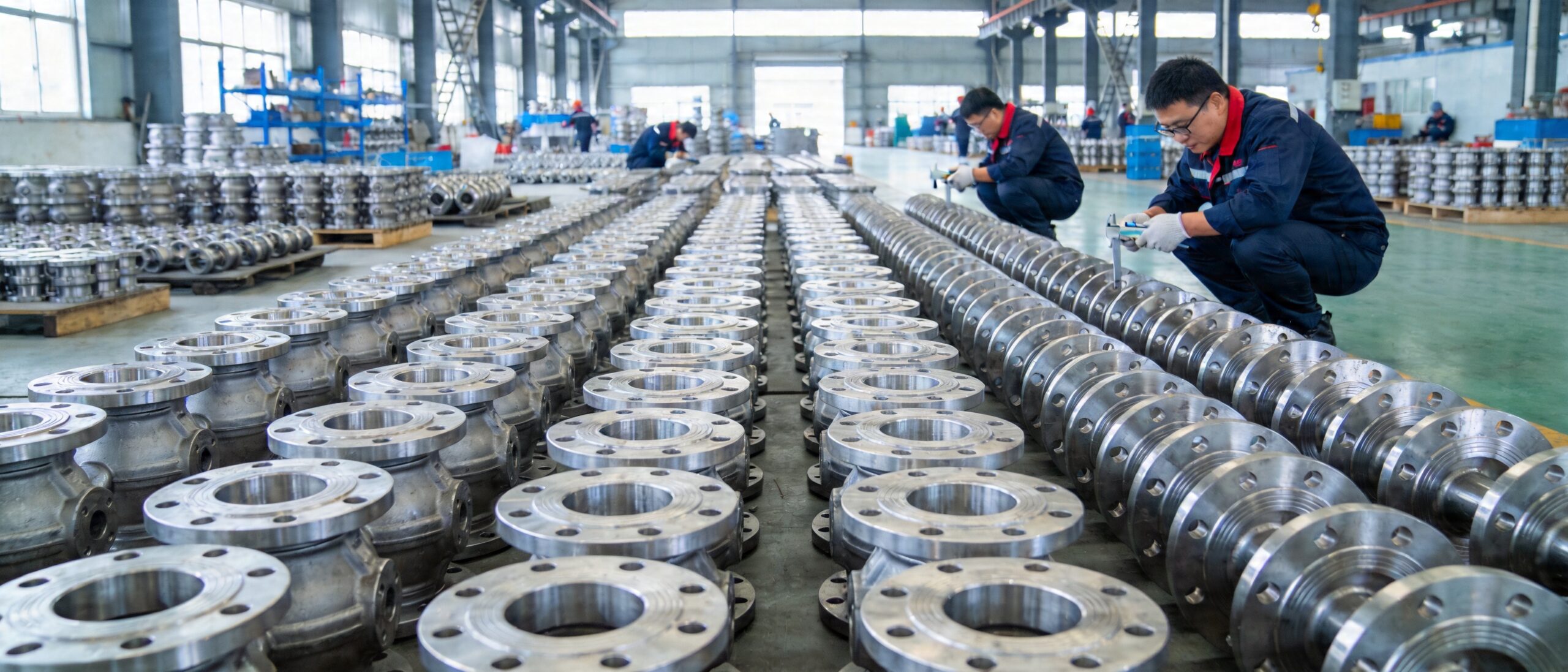
Introduction to Flange Material Selection in 2026
The global flanges market, projected to reach $5.82 billion in 2026 with a CAGR of approximately 7%, is undergoing a significant transformation. Driven by stringent environmental regulations like the fully effective EU Carbon Border Adjustment Mechanism (CBAM) and the demand for more resilient infrastructure in energy transition projects, material selection is no longer just about cost and pressure ratings. The Asia-Pacific region, holding a 40.7% market share, is at the forefront of supplying advanced materials. For procurement managers and engineers, choosing between stainless steel, carbon steel, and alloy steel flanges involves a complex analysis of corrosion resistance, mechanical properties, total lifecycle cost, and increasingly, the carbon footprint of the manufacturing process. This guide leverages the latest industry data and 2026 market trends to provide a definitive comparison.
Carbon Steel Flanges: The Cost-Effective Workhorse
Carbon steel flanges, primarily conforming to standards like ASTM A105 (forged) and ASTM A350 (for low-temperature service), remain the most widely used type globally due to their favorable strength-to-cost ratio. They are the default choice for countless applications in water, steam, and hydrocarbon service within moderate temperature and non-corrosive environments. Common grades include A105 Grade 2, LF2, and A350 LF3 for sub-zero applications. However, the 2026 landscape introduces new challenges. The EU CBAM places a carbon cost on imports, potentially affecting the competitiveness of traditionally manufactured carbon steel components. Forward-thinking suppliers like Jiaji Forging are addressing this by optimizing production efficiency and offering materials with verified recycled content, which has shown to increase order growth by 58% for the EU market. For standard ASME B16.5 and B16.47 applications without corrosion concerns, carbon steel is often the most economical choice, but engineers must now factor in potential carbon tariffs for projects with European end-users.
Stainless Steel Flanges: Corrosion Resistance Champions
Stainless steel flanges are indispensable for applications requiring resistance to oxidation, corrosion, and staining. The family is broad, encompassing Austenitic (300 series like 304/316), Martensitic (410, 420), and Ferritic (430) grades, with ASTM A182 F304/F316 being the most common specifications for forged flanges. The key advantage is the formation of a passive chromium oxide layer that protects against a wide range of corrosive media. In 2026, the demand is skewing towards higher-performance grades. For instance, Petrobras’ pre-salt FPSO projects specifically require Duplex 2205 (UNS S31803/F51) and Super Duplex 2507 (UNS S32750/F53) for CO2-rich environments containing up to 20% CO2. As highlighted in our comparison of Duplex 2205 vs Super Duplex 2507, these grades offer superior strength and chloride stress corrosion cracking (SCC) resistance compared to standard austenitics. The PREN (Pitting Resistance Equivalent Number) of Super Duplex 2507 is approximately 42, making it ideal for aggressive seawater service, a critical factor for marine and offshore piping systems.
Alloy Steel & Special Material Flanges: Engineered for Extreme Conditions
Alloy steel flanges are engineered solutions where standard carbon or stainless steels fall short. This category includes low-alloy steels like ASTM A182 F11, F22, and F91 for high-temperature power generation, and the high-performance “super” alloys. The latter is where significant market growth is occurring, with custom/high-end flanges now representing 42% of top-tier export orders. For the most severe environments—such as deep-water oil & gas with high H2S/CO2, LNG cryogenic service, or advanced chemical processing—materials like Nickel Alloys (Inconel 625/825, Hastelloy C276), Titanium, and the aforementioned Duplex/Super Duplex steels are mandatory. Suppliers capable of custom metal forging for these grades are seeing their market share grow from 19% to 27%. For example, Jiaji Forging specializes in producing flanges from Inconel 625 for sour service per NACE MR0175 and from Duplex 2205 for temperatures up to 250°C in CO2 corrosion service, meeting the exacting specifications of major energy companies.
Comparative Analysis: Key Selection Factors for 2026
Choosing the best material requires a side-by-side evaluation of key properties against application requirements.
Corrosion Resistance & Environment
• Carbon Steel: Poor. Requires coatings (FBE, galvanizing) or cathodic protection in corrosive environments. Unsuitable for chlorides, acids, or marine atmospheres without protection.
• Stainless Steel (304/316): Excellent general corrosion resistance. 316 offers better chloride resistance. Susceptible to chloride SCC above ~60°C.
• Duplex/Super Duplex (2205/2507): Outstanding resistance to chloride SCC, pitting, and crevice corrosion. Ideal for seawater, oil & gas production with CO2/H2S.
• Nickel Alloys (625/825): Exceptional resistance to a broad range of acids, caustics, and sour gas (H2S). The premium choice for severe chemical and offshore service.
Mechanical Strength & Temperature
• Carbon Steel (A105): Good strength at room temperature. Yield strength ~250 MPa. Notch toughness decreases at low temps; requires impact-tested grades (A350) for sub-zero service.
• Stainless Steel (316): Moderate strength (Yield ~205 MPa). Retains strength at elevated temps but can be subject to sensitization.
• Duplex 2205: High strength (Yield ~450 MPa). Excellent strength-to-weight ratio. Suitable for service up to 250°C-300°C.
• Alloy Steel (F91): High-temperature creep strength. Designed for power plant service above 500°C.
Cost & Lifecycle Considerations
• Initial Cost: Carbon Steel << Stainless 316 < Duplex 2205 < Nickel Alloys.
• Lifecycle Cost: In corrosive environments, the higher upfront cost of stainless or duplex is offset by reduced maintenance, replacement, and downtime. EU CBAM may add a cost premium to carbon-intensive production.
• Fabrication: Carbon steel is easiest to weld and machine. Duplex and nickel alloys require controlled welding procedures (specific heat input, filler metals) to preserve corrosion properties.
Market Trends and Application-Specific Recommendations for 2026
The pipeline demand in 2026 is driven by LNG expansion, petrochemical capacity additions, and energy transition projects, each with unique material needs. Here are targeted recommendations:
Oil & Gas (Upstream/Offshore): For seawater cooling systems, CuNi 90/10 or Duplex 2205 flanges are preferred. For high-pressure, CO2-rich production systems (like pre-salt fields), Super Duplex 2507 or Inconel 625 is mandated. API 6A wellhead flanges often use alloy steels like F22. Ensure suppliers hold 3.1/3.2 material certification for critical offshore projects.
Petrochemical & Chemical: Material selection depends on the process medium. Stainless 316L is common for many services, but duplex steels are used for chloride-containing streams. Nickel alloys like Inconel 825 are specified for severe acid environments. Refer to comprehensive material selection guides for medium compatibility.
Power Generation (LNG & Thermal): LNG cryogenic terminals require austenitic stainless steel (304L, 316L) or nickel steel (ASTM A522) for temperatures down to -196°C. Conventional power plants use alloy steels (F11, F91) for high-temperature steam lines.
Water & Marine: For standard water treatment, carbon steel with coatings is sufficient. For desalination plants or shipboard seawater systems, Duplex 2205 or Super Duplex 2507 provides the necessary corrosion resistance and strength.
The rise of smart manufacturing is also a key trend. Leading global flange manufacturers are implementing AI-powered quality inspection, cutting defect detection time from 15 minutes to 2 seconds, and robot welding, which has reduced defect rates by 32%. This enhances consistency, especially for critical alloy materials.
How to Choose a Flange Material Supplier for 2026 Projects
Selecting the right partner is as crucial as selecting the right material. Use this checklist:
Certifications to Verify:
• Quality Management: ISO 9001:2015 is a baseline.
• Product & Material Standards: ASME Section II material approval, ASTM specifications, API 6A (for wellhead), PED 2014/68/EU Annex I (for CE marking in Europe).
• Industry-Specific: NACE MR0175/ISO 15156 for sour service, NORSOK M-650 for offshore, AD2000 for German market, DNV/ABS for marine.
• CBAM Readiness: Can the supplier provide verified data on the carbon footprint and recycled content of their products?
Critical Questions to Ask:
1. Can you provide a 3.1/3.2 material certificate for this heat of Duplex 2205?
2. What is your documented welding procedure (WPS/PQR) for joining this nickel alloy flange to a pipe?
3. What is your MOQ for custom forged Super Duplex 2507 flanges to ASME B16.5, Class 1500?
4. Do you have in-house destructive testing (impact, corrosion testing) capabilities?
5. How do you ensure traceability from raw material to finished flange?
Price Factors Beyond Unit Cost:
• Material Yield & Forging Efficiency: A skilled forger minimizes waste on expensive alloy stock.
• Testing & Documentation: RT, UT, PMI, and full material traceability add cost but are non-negotiable for critical service.
• Logistics & Lead Time: Reliable supply chain management for on-time delivery to remote project sites (e.g., offshore).
• Technical Support: Supplier expertise in material selection and application engineering adds immense value.
Frequently Asked Questions (FAQ)
Q: Can I use a stainless steel flange on a carbon steel piping system?
A: Yes, it is mechanically possible and often done when only a section of the system requires corrosion resistance. However, it creates a galvanic couple where the carbon steel (anode) will corrode preferentially to protect the stainless steel (cathode). Proper insulation kits (gaskets, sleeves, washers) are required to mitigate this galvanic corrosion. Consulting with your flange supplier’s engineering team is recommended.
Q: What is the main advantage of Duplex 2205 over standard 316 stainless steel?
A: The two primary advantages are double the yield strength (allowing for thinner, lighter components) and far superior resistance to chloride stress corrosion cracking (SCC). This makes Duplex 2205 the material of choice for offshore, marine, and chemical environments where chlorides are present, as detailed in our guide to duplex steel suppliers.
Q: How does the EU CBAM affect my flange purchasing decisions in 2026?
A: Starting 2026, EU importers will need to purchase CBAM certificates based on the embedded carbon emissions of products like flanges. Flanges produced with less carbon-intensive methods (e.g., using electric arc furnaces with recycled scrap) will incur lower CBAM costs, making them more competitive. Proactively choose suppliers who can provide low-carbon products and transparent emissions data.
Q: When should I consider a custom-forged flange versus a standard stock item?
A: Consider custom forging for: 1) Non-standard sizes/dimensions outside ASME B16.5/B16.47, 2) Special materials like high-nickel alloys or proprietary grades, 3) Very large diameters or pressure classes, 4) Integrally forged flanges with special hubs or extensions, and 5) When you require full traceability and customized testing protocols. Industrial forging specialists excel in these areas.
Q: Is PREN the only number I should check for corrosion resistance?
A: No. PREN (Pitting Resistance Equivalent Number) is a useful guide for ranking pitting and crevice corrosion resistance, especially in chloride environments (higher PREN is better). However, it does not account for resistance to other forms of corrosion like SCC, general acid corrosion, or intergranular attack. Always consult corrosion data tables for your specific service medium and temperature.
References & Industry Standards
This guide is based on industry data and the following authoritative standards and resources:
• ASTM International – For material specifications (A182, A105, A350, etc.).
• ASME – For dimensional standards (B16.5, B16.47) and boiler/pressure vessel code.
• API – For oil and gas industry specifications (API 6A, 17D).
• European Commission – For regulations on pressure equipment (PED 2014/68/EU) and the Carbon Border Adjustment Mechanism (CBAM).
• NACE International / AMPP – For standards on corrosion prevention and materials for sour service (MR0175).
Related Products & Resources from Jiaji Forging
- Top 7 Cryogenic Flange Suppliers for LNG Terminal Constructi
- Top 10 ASME B16.47 Large Diameter Flange Suppliers (2026 Spe
- Top 10 Duplex Steel Flange Suppliers in China (2025 Guide)
- Top 5 Global Flange Suppliers for EU CBAM Compliance (2026 G
- Global Top 20 Flange Manufacturers: Leading Suppliers of Dup
As a professional flange manufacturer, Jiaji Forging provides custom forging solutions for global industries. Contact our engineering team for technical support and quotation.