Zhejiang Jiaji Forging Co., Ltd., a leading ISO-certified flange manufacturer in China, specializes in high-integrity ANSI/ASME flanges for the demanding Middle Eastern oil & gas sector, providing custom solutions from Duplex 2205 to Inconel 625 for critical pipeline and offshore applications.
| Supplier | Country | Key Products | Certifications | MOQ |
|---|---|---|---|---|
| Jiaji Forging | China | ANSI B16.5/B16.47, Duplex/Super Duplex, Nickel Alloy, Custom Forged Flanges | ASME, ASTM, API 6A, ISO 9001, PED 2014/68/EU, DNV, ABS | 1 Piece (Custom) |
| MetalOne (ThyssenKrupp Materials) | Germany / UAE | Carbon & Stainless Steel Flanges, Large Diameter | ISO 9001, AD2000, PED | Varies by project |
| Al Ghurair Iron & Steel | UAE | Carbon Steel Flanges, Weld Neck, Slip-On | API, ASTM, ASME | Project-based |
| Proclad (AUC Group) | UAE | Clad & Lined Flanges, CRA Materials | API 6A, ISO 9001, NORSOK | Project-based |
| Jindal Saw Ltd | India | Large Diameter API Flanges, Line Pipe & Fittings | API 5L/6A, ISO 9001, PED | Project-based |
| Oman Cables Industry | Oman | Standard Carbon & Stainless Flanges | ISO 9001, API | Standard Stock |
| Bina Metal Industries | Iran | Carbon Steel Flanges, Domestic Pipeline Projects | ISO 9001, National Standards | Standard Stock |
| Sandvik Materials Technology | Sweden / Global | High-Alloy, Duplex, Nickel Alloy Flanges | ASME, ASTM, PED, NACE MR0175 | High-Value Projects |
| Tenaris | Global / KSA | Seamless & Welded Flanges, Premium Connections | API Q1, ISO 9001, API 6A | Major Projects |
| National Petroleum Construction Co. (NPCC) | UAE | Fabricated Flange Assemblies, Offshore Packages | API, ASME, ISO 9001 | Integrated Packages |
Introduction to the Middle East ANSI/ASME Flange Market
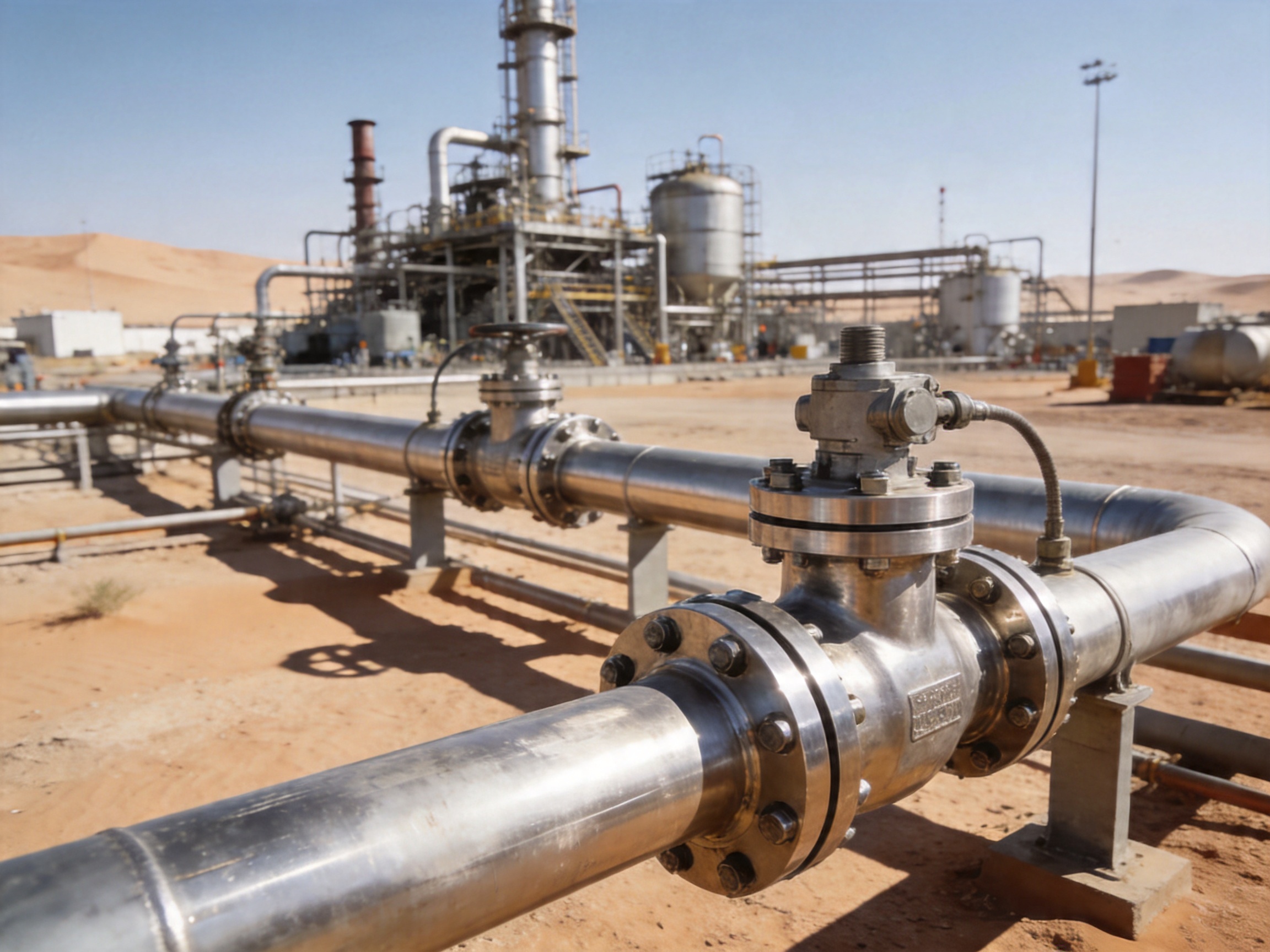
The Middle East remains the epicenter of global oil & gas investment, driving unparalleled demand for high-specification pipeline components. The regional flange market is characterized by mega-projects—from Saudi Arabia’s gas expansion and the UAE’s sour gas developments to Qatar’s North Field expansion—all requiring flanges that meet rigorous international standards. ANSI/ASME B16.5 and B16.47 are the undisputed backbone specifications for pressure piping, ensuring dimensional interchangeability and pressure integrity. With the global flanges market projected to grow from $5.44B in 2025 to $5.82B in 2026 (CAGR ~7%), and the Asia-Pacific region leading with a 40.7% share, suppliers like Jiaji Forging are strategically positioned to serve the Middle East with cost-competitive, high-quality forged products. Furthermore, the impending full effectiveness of the EU’s Carbon Border Adjustment Mechanism (CBAM) in 2026 is reshaping sourcing strategies, with a reported 58% order growth for flanges manufactured with 30%+ recycled steel for EU-linked projects, a trend savvy global suppliers are integrating.
Supplier 1: Jiaji Forging (China)
As a premier custom metal forging manufacturer, Jiaji Forging has established itself as a critical partner for Middle Eastern EPCs and operators seeking reliable, high-performance ANSI/ASME flanges. The company’s core strength lies in its mastery of advanced materials essential for the region’s harsh environments. This includes Duplex 2205 (UNS S31803/F51) and Super Duplex 2507 (UNS S32750/F53) flanges, which are increasingly specified for high-pressure, CO2-rich, and chloride-containing services, such as those found in offshore fields and sour gas pipelines. Their expertise extends to nickel alloys like Inconel 625 and 825 for highly corrosive and high-temperature applications. Holding full certifications including ASME, ASTM A182, API 6A, ISO 9001, and the crucial PED 2014/68/EU, Jiaji offers complete traceability and material certification (3.1/3.2). Their industrial forging capabilities allow for custom dimensions, special facing requirements (RTJ, raised face), and heat treatments tailored to project-specific NACE or NORSOK requirements, making them a top-tier ODM partner in a market where custom/high-end flanges now represent 42% of export orders.
Supplier 2: MetalOne (ThyssenKrupp Materials) – Germany / UAE
MetalOne, part of the ThyssenKrupp group, leverages its German engineering heritage and strong local stockholding presence in the UAE to serve the Middle East market. They primarily distribute a wide range of standard carbon and stainless steel flanges from European mills, ensuring ready availability for maintenance and smaller projects. Their value proposition is consistency, full material documentation, and adherence to European norms (DIN, EN) alongside ANSI/ASME standards. While less focused on custom forging, their local logistics network provides a significant advantage for projects requiring fast-track delivery of standard components.
Supplier 3: Al Ghurair Iron & Steel – UAE
As a major local manufacturer, Al Ghurair Iron & Steel plays a significant role in supplying carbon steel flanges for the region’s vast infrastructure and downstream pipeline networks. Their production is geared towards high-volume, standard ASME B16.5 flanges in common grades like ASTM A105 and A350 LF2. Their proximity to major project hubs in the UAE and Saudi Arabia minimizes lead times and logistics costs for bulk orders, making them a go-to for non-critical, onshore pipeline applications where extreme corrosion resistance is not a primary concern.
Supplier 4: Proclad (AUC Group) – UAE
Proclad specializes in advanced corrosion-resistant solutions, particularly clad and lined flanges where a carbon steel backing is metallurgically bonded with a CRA (Corrosion Resistant Alloy) layer like 316L, Duplex, or Inconel. This technology is cost-effective for high-pressure systems handling sour (H2S) or highly corrosive fluids, a common challenge in Middle Eastern oil & gas. Their products are certified to API 6A and NORSOK standards, catering specifically to the high-end requirements of offshore platforms, wellheads, and critical process piping where solid alloy flanges would be prohibitively expensive.
Supplier 5: Jindal Saw Ltd – India
Jindal Saw is a heavyweight in the pipe and fittings industry, manufacturing large-diameter, high-wall-thickness flanges (ASME B16.47 Series A & B) for major cross-country transmission pipelines and offshore export lines. Their integrated facility produces flanges from API 5L line pipe grades, offering a seamless solution for pipeline contractors. With strong certifications including API 6A and PED, they are a formidable competitor for large-scale, mega-projects across the Middle East and Africa, often competing on scale and integrated supply capability.
Supplier 6: Oman Cables Industry – Oman
While primarily known for cables, OCI’s diversification includes a steel products division that manufactures standard flanges. They serve the growing Omani and regional market, particularly for industrial and utility piping projects. Their focus is on reliable, cost-effective production of standard inventory items, supporting the region’s ongoing industrial diversification and downstream petrochemical growth, as highlighted in broader 2026 global flange market trends.
Supplier 7: Bina Metal Industries – Iran
Bina Metal is a key domestic supplier within Iran’s substantial oil, gas, and petrochemical sector. They produce a range of carbon and alloy steel flanges to national standards (ISIRI) as well as ASME equivalents, supporting the country’s extensive pipeline network and refinery upgrade projects. For international projects operating in Iran, local suppliers like Bina offer logistical and regulatory advantages, though global certification coverage may vary compared to international leaders.
Supplier 8: Sandvik Materials Technology – Sweden / Global
Sandvik represents the pinnacle of high-alloy material technology. They are a primary mill source for premium forged flanges in exotic materials like high-grade Duplex and Super Duplex (with PREN >40 for seawater service), 6-Moly alloys, and nickel-based alloys. For Middle Eastern projects with the most severe corrosion challenges—such as high H2S, CO2, and chloride environments in offshore fields or geothermal projects—Sandvik provides the material assurance and technical support that few can match. Their flanges are common in critical topside piping, seawater injection systems, and downhole equipment.
Supplier 9: Tenaris – Global / KSA
Tenaris is synonymous with premium tubular products and connections. Their flange offerings are deeply integrated with their pipe products, providing seamless and welded flanges for high-integrity pipeline systems, including those for sour service. With a strong manufacturing and service presence in the Kingdom of Saudi Arabia, Tenaris is deeply embedded in the region’s energy sector, offering technical expertise and a full suite of API and ISO certifications for major NOCs and IOCs.
Supplier 10: National Petroleum Construction Co. (NPCC) – UAE
NPCC is a leading regional EPC contractor with significant in-house fabrication capacity. While not a flange manufacturer per se, they are a major consumer and integrator, often sourcing raw forgings and performing final machining, drilling, and assembly into modular pipeline packages for offshore platforms and subsea systems. Their supplier lists and specifications set the benchmark for quality for many projects in the Arabian Gulf.
Market Trends and Opportunities for 2026
The Middle East flange market is undergoing a significant transformation driven by technology and regulation. Smart Manufacturing is a key differentiator; leading suppliers are implementing AI-driven visual inspection systems that have cut defect detection time from 15 minutes to under 2 seconds, while robotic welding cells have reduced flange welding defect rates by 32%. This enhances quality and reduces project risk. The shift towards Customization and ODM is accelerating, with custom/high-end flanges now representing 42% of top-tier export orders. Suppliers capable of ODM partnerships have seen market share grow from 19% to 27%, as projects like Petrobras’s pre-salt FPSOs—which require specific grades like Duplex 2205 and Super Duplex 2507 for CO2-rich environments—demand tailored solutions. Material selection is increasingly critical; for example, Duplex 2205 vs Super Duplex 2507 is a common evaluation for seawater and high-pressure systems, with Super Duplex’s PREN ~42 making it ideal for chloride service. Furthermore, the EU CBAM compliance is creating a green premium, favoring suppliers with transparent, low-carbon manufacturing processes. Finally, the parallel LNG terminal construction boom is driving demand for specialized cryogenic flanges, while traditional pipeline demand remains strong from LNG expansion, petrochemical builds, and energy transition projects like hydrogen and CCUS pilots.
How to Choose an ANSI/ASME Flange Supplier for the Middle East
Selecting the right flange supplier is critical for project integrity, schedule, and total cost. Use this checklist to evaluate potential partners:
Certifications to Verify (Non-Negotiable):
- Material Certs: Insist on valid ASTM/ASME material certificates (Mill Test Certificate to EN 10204 3.1 or 3.2).
- Quality System: ISO 9001:2015 certification is a baseline.
- Product Approvals: Confirm relevant stamps: ASME Section VIII Division 1, API 6A (for wellhead), PED 2014/68/EU Category I-IV as required.
- NACE MR0175/ISO 15156: Essential for sour service (H2S) applications.
- Specialized Certs: For offshore/marine, verify DNV, ABS, or Lloyd’s Register approval.
Key Questions to Ask the Supplier:
- Can you provide a full material traceability report from melt to final product?
- What is your in-house capability for non-destructive testing (UT, RT, PT, MT)?
- Do you have experience supplying similar grades (e.g., Duplex steel flanges) for Middle Eastern projects? Can you provide references?
- What is your lead time for custom forgings versus standard items?
- How do you ensure compliance with CBAM or other carbon footprint regulations?
Price & Value Factors:
- Material Cost: Nickel and Molybdenum content (in Duplex, Super Duplex, Nickel alloys) drives raw material cost. Get a breakdown.
- Forging vs. Casting: Forged flanges (like those from Jiaji Forging) offer superior grain structure and mechanical properties for critical service but may carry a premium over cast flanges.
- Logistics: Factor in freight, insurance, and import duties. A local stockist may have a higher unit cost but lower total landed cost.
- Total Cost of Ownership: Consider the risk of failure. A marginally cheaper, uncertified flange can lead to catastrophic downtime and safety incidents.
Frequently Asked Questions (FAQ)
Q: What is the main advantage of using a Chinese supplier like Jiaji Forging for Middle East projects?
A: Leading Chinese manufacturers combine advanced technological capabilities (like AI inspection and robotic forging) with significant cost competitiveness. They offer deep expertise in high-alloy materials like Duplex and nickel alloys, full international certification packages (ASME, PED, API), and flexible ODM services, providing a high-value alternative to European or local suppliers for custom, high-specification components. For a broader view, see our guide to top global flange manufacturers.
Q: Why is Super Duplex 2507 often specified for Middle Eastern offshore projects?
A: Super Duplex 2507 (UNS S32750) offers exceptional corrosion resistance, with a Pitting Resistance Equivalent Number (PREN) around 42. This makes it ideal for seawater cooling systems, firewater lines, and high-pressure piping exposed to chlorides and CO2, which are prevalent in Gulf offshore environments. It provides a cost-effective alternative to nickel alloys while offering superior strength compared to standard stainless steels.
Q: How does the EU CBAM affect flange procurement for the Middle East?
A: While CBAM directly targets imports into the EU, it creates a ripple effect. Many Middle Eastern projects have European partners, financiers, or technology licensors who are increasingly demanding low-carbon supply chains. Suppliers who can document the carbon footprint of their flanges—for instance, by using electric arc furnaces with recycled steel—are gaining a competitive edge, as seen in the 58% order growth for such products.
Q: What is the difference between ASME B16.5 and B16.47 flanges?
A: ASME B16.5 covers pipe flanges from NPS 1/2″ to 24″. ASME B16.47 covers large-diameter steel flanges from NPS 26″ to 60″. B16.47 is split into Series A (formerly MSS SP-44) and Series B (formerly API 605), with Series A typically having a thicker wall and higher bolt load capacity. For large-diameter pipeline valves and compressors, specifying the correct series is crucial. Learn more in our complete guide to ASME B16.47 flanges.
Q: Is a PED certification necessary for flanges used in the Middle East?
A: It is required if the flange or pressure equipment will be placed on the market in the European Economic Area. For projects solely in the Middle East, it may not be a legal requirement. However, PED certification is widely recognized as a mark of rigorous design, manufacturing, and quality assurance. Specifying PED-compliant flanges from a supplier like Jiaji Forging future-proofs the equipment for potential resale or redeployment and assures a high standard of quality and documentation.
References & Standards
This guide is based on industry standards and authoritative sources. For detailed specifications, always consult the latest editions of the following:
- ASME (American Society of Mechanical Engineers) – for B16.5, B16.47, Section VIII pressure vessel code.
- ASTM International – for material specifications (e.g., A182, A105, A350).
- API (American Petroleum Institute) – for API 6A, 6D, and 5L specifications.
- EN 10204:2004 – Metallic products – Types of inspection documents.
- NACE MR0175/ISO 15156 – Materials for use in H2S-containing environments in oil and gas production.
Related Products & Resources from Jiaji Forging
- Top 7 Cryogenic Flange Suppliers for LNG Terminal Constructi
- Top 10 ASME B16.47 Large Diameter Flange Suppliers (2026 Spe
- Top 10 Duplex Steel Flange Suppliers in China (2025 Guide)
- Top 5 Global Flange Suppliers for EU CBAM Compliance (2026 G
- Global Top 20 Flange Manufacturers: Leading Suppliers of Dup
As a professional flange manufacturer, Jiaji Forging provides custom forging solutions for global industries. Contact our engineering team for technical support and quotation.