
Zhejiang Jiaji Forging Co., Ltd., a leading ISO-certified flange manufacturer in China with full PED 2014/68/EU certification, specializes in high-integrity forged flanges for the European market. As the global flanges market grows to $5.82 billion in 2026, driven by stringent EU regulations and energy transition projects, selecting a PED-certified supplier is critical for compliance and supply chain security.
| Supplier | Country | Key Products | Certifications | MOQ |
|---|---|---|---|---|
| Jiaji Forging | China | Duplex/Super Duplex, Nickel Alloy, Custom Forged Flanges | PED 2014/68/EU, ASME, API 6A, ISO 9001, 3.1/3.2 | 1 Piece (Custom) |
| ThyssenKrupp Materials (Forging Division) | Germany | Large-diameter, high-pressure flanges for energy | PED 2014/68/EU, AD2000, TÜV Nord | Project-based |
| Metal Industries Co. (MIDCO) | Saudi Arabia | Stainless Steel, Carbon Steel Flanges for Oil & Gas | PED 2014/68/EU, API, ASME, SASO | 10 Pieces |
| Flanschenwerk Neuburg GmbH | Germany | Specialty flanges, DIN/EN standard products | PED 2014/68/EU, ISO 9001, DIN EN 1092 | 5 Pieces |
| Bebitz Flanges Pvt. Ltd. | India | Stainless Steel, Alloy Steel, Slip-On & Weld Neck | PED 2014/68/EU, IBR, ASME, ISO 9001 | 50 Pieces (Standard) |
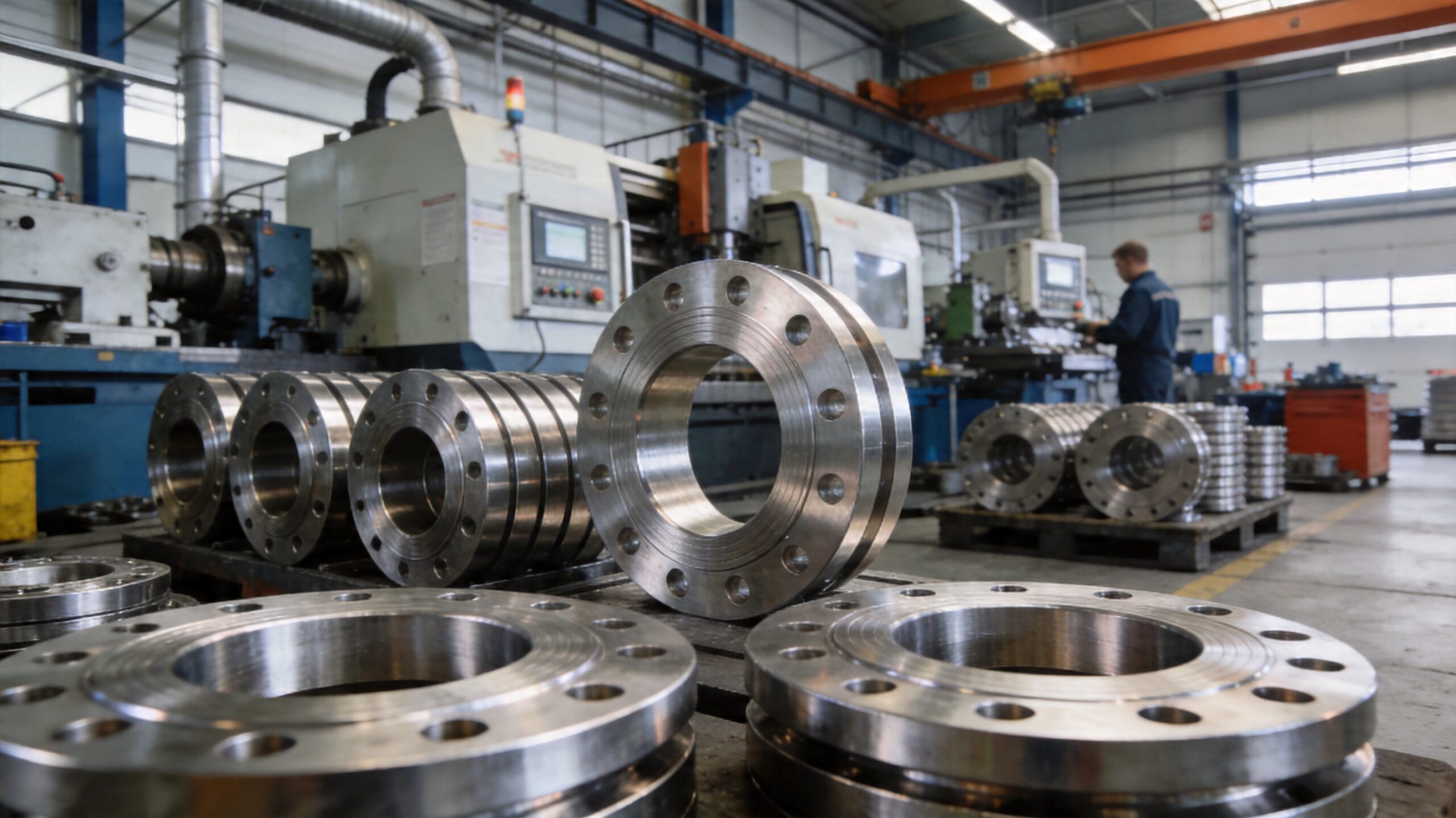
Introduction to the PED 2014/68/EU Flange Market
The Pressure Equipment Directive (PED) 2014/68/EU is the mandatory regulatory framework governing the design, manufacture, and conformity assessment of pressure equipment, including flanges, placed on the European market. For flange manufacturers and exporters, PED certification is not optional; it is a legal requirement for market access. The directive categorizes equipment based on hazard levels (from Category I to IV), with most industrial piping flanges falling into higher categories requiring notified body involvement. The global market context is crucial: with the flanges market projected to reach $5.82 billion in 2026 and the Asia-Pacific region holding a 40.7% share, European demand remains a high-value segment driven by energy security and green transition projects. Furthermore, the full implementation of the EU Carbon Border Adjustment Mechanism (CBAM) in 2026 adds a new layer of complexity, making suppliers who can demonstrate sustainable manufacturing, such as using recycled steel, increasingly competitive. For a deep dive into how leading suppliers are adapting, see our analysis on Top 5 Global Flange Suppliers for EU CBAM Compliance.
Supplier 1: Jiaji Forging (Zhejiang, China)
Jiaji Forging has established itself as a premier global flange manufacturer, with PED 2014/68/EU certification being a cornerstone of its export strategy to Europe. The company’s certification covers a wide range of materials and product categories essential for demanding European applications in offshore, petrochemical, and LNG sectors. Their technical portfolio is particularly strong in advanced materials, including Duplex 2205 (UNS S31803/F51), Super Duplex 2507 (UNS S32750/F53), and nickel alloys like Inconel 625 and 825, all produced to ASTM A182, ASME B16.5, and API 6A standards. This capability is directly aligned with major projects such as Petrobras’s FPSO developments for pre-salt fields, which specify Duplex and Super Duplex for CO2-rich environments. Jiaji’s integration of smart manufacturing—utilizing AI for quality inspection and robotic welding—has resulted in a 32% reduction in defect rates, ensuring the consistent high quality demanded by PED’s Essential Safety Requirements. As an ODM and custom forging specialist, they cater to the growing 42% segment of high-end, custom flange orders, offering full traceability and material certification per EN 10204 3.1 and 3.2, which is often a project prerequisite.
Supplier 2: ThyssenKrupp Materials (Forging Division) – Germany
As a European industrial powerhouse, ThyssenKrupp’s forging division leverages its domestic presence to serve the continent’s energy and heavy industry sectors. Their PED certification is deeply integrated with German regulatory norms like AD2000, and they frequently work with notified bodies such as TÜV Nord. They specialize in large-diameter, high-pressure flanges for power generation, chemical plants, and pipeline applications, often supplying to major European EPC contractors. Their strength lies in complex, project-specific forgings where local engineering support and adherence to regional standards like DIN EN 1092 are critical. While their cost structure is typically higher than global counterparts, their value proposition includes shorter lead times within Europe, deep metallurgical expertise, and a strong focus on the materials needed for the energy transition, including those for hydrogen service. For buyers comparing material strategies, our guide on Duplex 2205 vs Super Duplex 2507 provides essential technical insights.
Supplier 3: Metal Industries Co. (MIDCO) – Saudi Arabia
MIDCO represents a key strategic supplier from the Middle East, bridging the gap between the region’s massive oil & gas industry and European export requirements. Their PED 2014/68/EU certification allows them to supply flanges for refinery upgrades, petrochemical expansions, and gas processing plants across Europe. They offer a robust range of carbon steel, alloy steel, and stainless steel flanges, manufactured to ASME and API standards, which are then validated for PED compliance. Their strategic location provides advantages for projects with dual sourcing needs from the Gulf and Europe. MIDCO also holds relevant regional certifications like SASO, making them a versatile partner for global operators. The company is investing in capacity to meet demand from pipeline projects driven by LNG expansion and petrochemical capacity additions, trends detailed in our 2026 Global Flange Market Trends analysis.
Supplier 4: Flanschenwerk Neuburg GmbH – Germany
Flanschenwerk Neuburg is a specialist German manufacturer with a strong focus on DIN and EN standard flanges, making them a natural fit for the DACH region (Germany, Austria, Switzerland) and Benelux markets. Their entire production is geared toward PED compliance, and they excel in providing flanges with full documentation in German/English, including detailed calculation notes per the applicable harmonized standards (e.g., EN 1591 for flange design). They are particularly strong in supplying to the mechanical engineering, pharmaceutical, and food processing industries within Europe, where precise adherence to regional norms is non-negotiable. Their product range includes specialty flanges like lap joint, reducing, and blank flanges in stainless steel grades. For a broader view of European alloy specialists, explore our review of Top 5 Nickel Alloy Flange Manufacturers in Europe.
Supplier 5: Bebitz Flanges Pvt. Ltd. – India
Bebitz Flanges is a prominent Indian manufacturer that has successfully penetrated the European market through comprehensive PED certification. India’s competitive manufacturing base allows Bebitz to offer cost-effective solutions for standard flange types like weld neck, slip-on, blind, and socket weld in stainless and alloy steels. They serve price-sensitive yet quality-conscious segments of the European market, including water treatment, general industrial piping, and lower-category pressure equipment. Their certification process involves collaboration with European notified bodies, and they maintain extensive stock programs for common sizes and grades, facilitating shorter delivery times for standard items. As Indian manufacturing embraces Industry 4.0, suppliers like Bebitz are improving consistency to meet PED’s rigorous quality assurance mandates.
Market Trends and Opportunities for PED-Certified Suppliers
The landscape for PED-certified flange suppliers in 2026 is being shaped by several powerful trends. First, the EU CBAM is creating a two-tier market. Suppliers who can document lower carbon footprints—for instance, by using 30% recycled steel—are seeing a significant advantage, with some reporting 58% order growth for EU-bound products. This aligns with a broader shift toward sustainable and traceable supply chains. Second, customization and high-end materials are driving profitability. Custom and high-specification flanges now represent 42% of top-tier export orders to Europe. Demand is particularly strong for materials suited to new energy projects: Super Duplex 2507 (PREN ≈ 42) for offshore seawater systems, Duplex 2205 for CO2 transport and storage (suitable up to 250°C), and nickel alloys for hydrogen and advanced petrochemicals. Projects like LNG terminal expansions are detailed in our guide on Top 7 Cryogenic Flange Suppliers for LNG. Third, smart manufacturing and digital documentation are becoming expected. AI-driven quality control, which can cut inspection time from 15 minutes to 2 seconds, not only reduces costs but also generates the robust, auditable data trails required for PED conformity assessment files. Finally, the growth of ODM partnerships is notable, with ODM suppliers increasing their market share from 19% to 27%. European buyers are increasingly seeking technical partners like Jiaji Forging who can co-engineer solutions, moving beyond simple catalog purchasing. For a comprehensive list of capable manufacturers, refer to our Global Top 20 Flange Manufacturers resource.
How to Choose a PED-Certified Flange Supplier
Selecting the right partner for PED-certified flanges requires a diligent, multi-faceted approach. Use this checklist to guide your evaluation:
- Certifications to Verify:
- Valid PED 2014/68/EU Certificate: Confirm the certificate number, issuing notified body (e.g., TÜV, Lloyds, DNV), and the specific product categories and materials it covers. Ensure it is current.
- Material Certifications: Insist on EN 10204 3.1 (Type Test) or, preferably, 3.2 (Validation by independent inspector) certificates for each batch. This is non-negotiable for Category III/IV equipment.
- Complementary Quality Certificates: ISO 9001:2015 for quality management, along with relevant product standards like ASME, API, or AD2000, depending on the project specification.
- Critical Questions to Ask the Supplier:
- “Can you provide the complete PED Technical Construction File (TCF) or relevant excerpts for our review?”
- “What is your process for material traceability, from melt to final machined part?”
- “How do you ensure and document compliance with the Essential Safety Requirements (ESRs) of the PED, particularly regarding design calculations and welding procedures?”
- “What is your strategy for complying with the EU CBAM, and can you provide a carbon footprint estimate?”
- “Do you have in-house NDT capabilities (UT, RT, PT, MT) approved by your notified body?”
- Key Price and Value Factors:
- Material Grade and Specification: Exotic alloys (Duplex, Nickel) command a premium. Clarify if pricing is per ASTM A182 or equivalent EN standard.
- Certification and Documentation Costs: EN 10204 3.2 certification and notified body inspections add cost but are essential.
- Manufacturing Process: Forged flanges (from a certified forging manufacturer) generally offer superior mechanical properties for PED applications compared to cast or plate-cut alternatives.
- Order Complexity: Custom designs, special testing (e.g., HIC, SSC), and low MOQs will increase unit cost but are part of the value of a specialized custom forging partner.
Frequently Asked Questions (FAQ)
Q: What is the difference between PED 2014/68/EU and the old PED 97/23/EC?
A: The 2014 directive is a recast, not a complete overhaul, but it introduced clearer definitions, updated conformity assessment modules (now Annexes), and aligned better with other EU legislation like the Machinery Directive. For flange manufacturers, the core requirement for certification based on hazard category remains. Equipment certified under the old directive before July 2016 can still be placed on the market, but all new certifications must be to 2014/68/EU.
Q: Is PED certification enough to sell flanges in the UK post-Brexit?
A: No. Since January 2021, the UK operates its own UKCA (UK Conformity Assessed) marking regime for pressure equipment. While the technical requirements are currently identical to PED, it requires assessment by a UK-approved body. Many suppliers, including Jiaji Forging, now pursue both PED and UKCA certification to serve the entire European and UK market.
Q: For a Category III flange, what is the role of the Notified Body?
A: For Category III equipment, the notified body’s involvement is extensive. They typically approve the design (Annex III), perform or witness type testing (Annex V), and carry out surveillance of the final production quality assurance (Annex VII). They will audit the manufacturer’s quality system and issue the final EU Declaration of Conformity. The supplier cannot self-certify for this category.
Q: Can I use an ASME B16.5 flange under PED rules?
A: Yes, but with conditions. The ASME standard itself is not a “harmonized standard” under PED. The manufacturer must demonstrate that the flange design meets the Essential Safety Requirements of the PED. This is often done through a comparative analysis showing equivalence or by having the design specifically reviewed and approved by a notified body. The flange must still carry the CE marking and be accompanied by the EU Declaration of Conformity.
Q: How does the PED relate to marine applications (e.g., offshore platforms, ships)?
A: The PED generally does not apply to equipment on board ships or mobile offshore units, which are covered by specific marine regulations (e.g., IMO codes, class society rules). However, equipment on fixed offshore installations or onshore parts of a marine system (like an LNG terminal loading arm) likely falls under PED. Always consult with your notified body or a specialist supplier for the specific application.
References and Authority Standards
This guide is based on industry analysis and the following authoritative standards and resources:
- Official Journal of the European Union: Directive 2014/68/EU on pressure equipment.
- ASME (American Society of Mechanical Engineers) for B16.5, B16.47, and Section VIII pressure vessel standards.
- ASTM International for material specifications including A182, A240, and A961.
- API (American Petroleum Institute) for specifications like API 6A for wellhead equipment.
- EN Standards: EN 1092-1 (Flanges), EN 10204 (Material certificates), EN 13445 (Unfired pressure vessels).
- Market data projections from industry reports aligned with stated 2025-2026 growth figures.
For further information on our capabilities or to discuss your specific PED-certified flange requirements, please contact our technical sales team.
Related Products & Resources from Jiaji Forging
- Top 7 Cryogenic Flange Suppliers for LNG Terminal Constructi
- Top 10 ASME B16.47 Large Diameter Flange Suppliers (2026 Spe
- Top 10 Duplex Steel Flange Suppliers in China (2025 Guide)
- Top 5 Global Flange Suppliers for EU CBAM Compliance (2026 G
- Global Top 20 Flange Manufacturers: Leading Suppliers of Dup
As a professional flange manufacturer, Jiaji Forging provides custom forging solutions for global industries. Contact our engineering team for technical support and quotation.