
Zhejiang Jiaji Forging Co., Ltd., a leading ISO 9001 & PED certified flange manufacturer in China, provides this comprehensive selection guide for large diameter blind flanges. With the global flanges market projected to reach $5.82 billion by 2026, and custom/high-end flanges now representing 42% of top-tier export orders, selecting the correct standard—ASME B16.5 vs ASME B16.47 Series A or B—is critical for procurement managers and engineers in oil & gas, petrochemical, and marine industries.
| Supplier | Country | Key Products | Certifications | MOQ |
|---|---|---|---|---|
| Zhejiang Jiaji Forging Co., Ltd. | China | Custom forged flanges (duplex, nickel alloy, stainless steel); ASME B16.5/B16.47, EN 1092-1, GOST 33259 | ISO 9001, PED 2014/68/EU, API 6A, ASME, ASTM, GOST (upon request) | 10 pcs |
| Supplier A (US-based) | USA | ASME B16.5/B16.47 flanges, carbon steel | ISO 9001, ASME | 50 pcs |
| Supplier B (EU-based) | Germany | EN 1092-1, ASME B16.5 flanges | PED, ISO 9001 | 25 pcs |
| Supplier C (India-based) | India | ASME B16.47 Series A flanges, alloy steel | ISO 9001, API | 100 pcs |
Introduction: Why Large Diameter Blind Flange Selection Matters in 2026
The global flanges market is expected to grow from $5.44 billion in 2025 to $5.82 billion in 2026, driven by LNG expansion, petrochemical capacity additions, and energy transition projects. Asia-Pacific leads with 40.7% market share. For project managers working on Tengizchevroil (TCO) expansion in Kazakhstan or SOCAR petrochemical complexes in Azerbaijan, understanding the difference between ASME B16.5, B16.47 Series A, and Series B is essential for compliance, cost optimization, and safety.
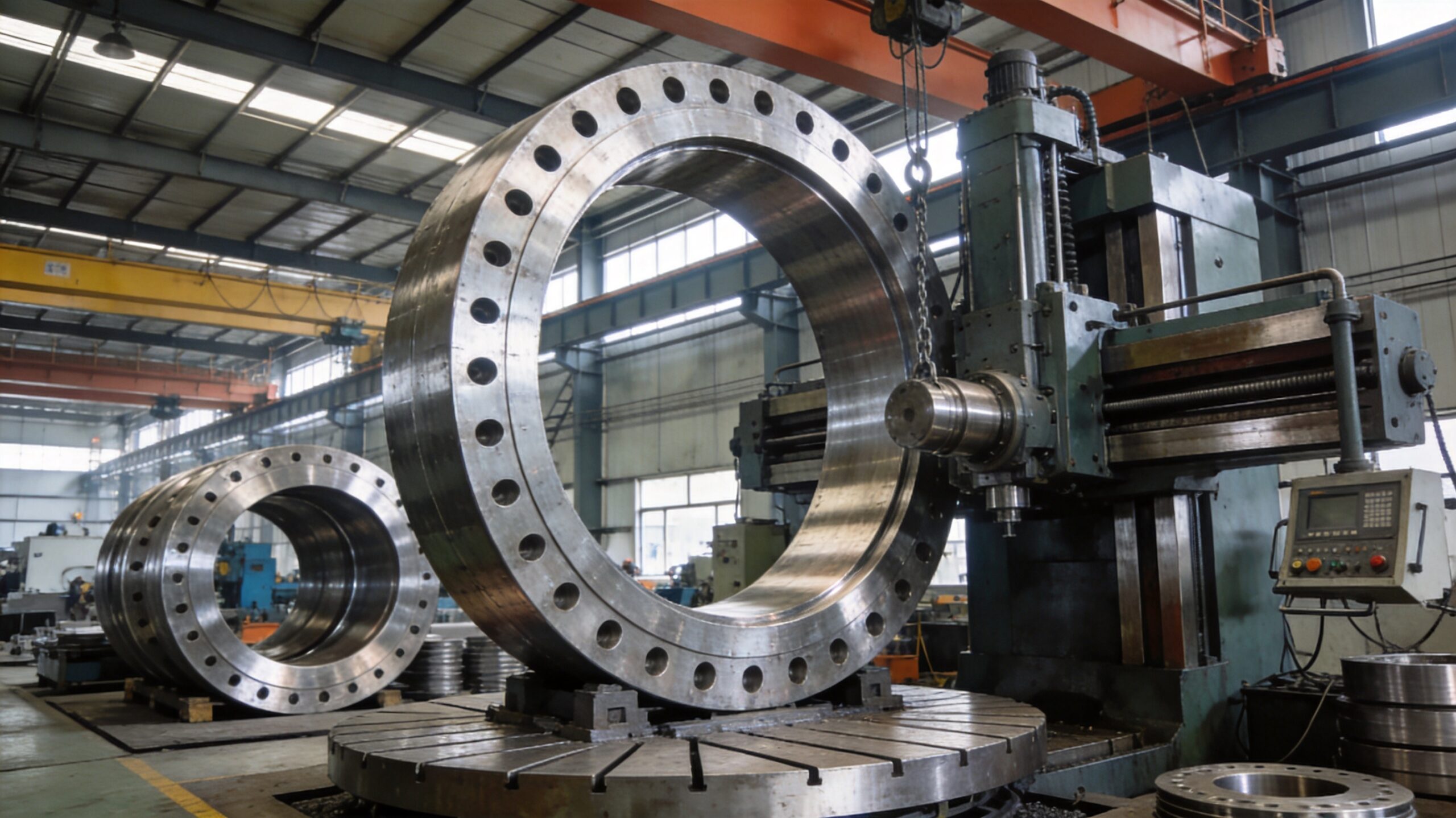
Large diameter blind flanges (NPS 26-48) are used to seal pressure vessel openings, pipeline ends, and valve connections in demanding environments. They must withstand high pressure, temperature extremes, and corrosive media. Our complete ASME B16.47 large diameter flange specification guide provides deeper technical details.
ASME B16.5 vs ASME B16.47: The Fundamental Difference
ASME B16.5 covers flanges from NPS ½ to NPS 24, with pressure classes 150, 300, 400, 600, 900, 1500, and 2500. For NPS 26 and above, you must use ASME B16.47, which covers NPS 26 through NPS 60 in two series:
- Series A (MSS SP-44): Heavier, thicker face, larger bolt circle diameter, higher pressure rating. Used for critical applications: high-pressure gas pipelines, refinery hydroprocessing, offshore platforms.
- Series B (API 605): Lighter, thinner face, smaller bolt circle. Used for lower-pressure systems: water pipelines, fire mains, cooling water systems, and general industrial piping.
For example, a 36″ Class 300 blind flange in Series A has a thickness of 4.75″ and weighs approximately 1,200 lbs, while Series B for the same class has a thickness of 3.50″ and weighs about 850 lbs. This weight difference directly impacts material cost, shipping, and installation.
Supplier #1: Zhejiang Jiaji Forging Co., Ltd. – Multi-Standard Large Diameter Blind Flanges
Zhejiang Jiaji Forging Co., Ltd. is a premier manufacturer of custom forged flanges in China, serving global clients in oil & gas, petrochemical, marine, and energy sectors. They specialize in duplex steel (2205, 2507, F51, F53), nickel alloy (Inconel 625, 825), and stainless steel flanges, with full compliance to ASME B16.5, ASME B16.47 Series A & B, EN 1092-1, and GOST 33259 standards.
Key capabilities include:
- Custom forging for NPS 26 to NPS 60 blind flanges in Classes 150 through 2500
- Materials: ASTM A182 F304, F316, F51, F53, F55, Inconel 625/825, Hastelloy C276
- Certifications: ISO 9001:2015, PED 2014/68/EU Category III/IV (Notified Body inspected), API 6A, ASME U-Stamp available
- Traceability: Full material traceability with heat numbers, chemical analysis, and mechanical test reports
- OEM/ODM: Custom dimensions, facing finishes, and special drilling patterns per client drawings
Jiaji Forging has supplied large diameter blind flanges for major Caspian region projects including TCO (Tengizchevroil) in Kazakhstan and SOCAR petrochemical complexes in Azerbaijan. They offer EN 1092-1 PN40/PN63 duplex steel flanges for SOCAR and GOST 33259 flanges for KazMunayGas pipeline expansion programs. Read more about ANSI/ASME flange suppliers for oil & gas pipelines.
Supplier #2: US-Based Manufacturer – ASME B16.47 Series A Specialists
A leading US-based manufacturer focuses on heavy-wall ASME B16.47 Series A flanges for North American and Middle Eastern oil & gas projects. They produce carbon steel (ASTM A105, A694 F65) and low-alloy steel flanges in sizes up to NPS 48, Class 900. Their flanges are used in high-pressure gas transmission pipelines and refinery hydrocrackers.
Certifications include ISO 9001, ASME U-Stamp, and API 6A. They maintain large stocks of standard sizes but have limited capability for duplex or nickel alloy materials, which is a constraint for offshore and corrosive service applications.
Supplier #3: EU-Based Manufacturer – PED-Certified for European Projects
This German manufacturer specializes in EN 1092-1 and ASME B16.47 Series B flanges for European and North African markets. They hold PED 2014/68/EU Category IV certification and supply flanges for LNG terminals, water treatment plants, and chemical processing units. Their Series B flanges are popular for lower-pressure applications where weight and cost savings are critical.
They offer stainless steel (1.4404, 1.4462) and carbon steel materials, with sizes up to NPS 48. However, they do not produce nickel alloy flanges, and lead times for custom sizes can exceed 16 weeks due to third-party forging subcontractors.
Supplier #4: Indian Manufacturer – Cost-Effective Series A Flanges for Mid-East Projects
An Indian manufacturer with API and ISO certifications supplies ASME B16.47 Series A flanges primarily for Middle Eastern oil & gas and petrochemical projects. Their competitive pricing (20-30% below US/EU suppliers) makes them attractive for budget-sensitive projects. They produce carbon steel and low-alloy steel flanges up to NPS 60, Class 600.
However, quality consistency can be an issue, and some procurement managers report challenges with material traceability and documentation for PED or GOST compliance. For projects requiring duplex or nickel alloy flanges, they typically outsource, leading to longer lead times.
Market Trends: Why Large Diameter Blind Flanges Are in High Demand (2026)
Several global trends are driving demand for large diameter blind flanges:
- LNG Terminal Construction: New LNG export terminals in the US, Qatar, and Mozambique require large diameter cryogenic flanges (NPS 30-48) in stainless steel and 9% nickel steel. See our guide on cryogenic flange suppliers for LNG terminals.
- Caspian Region Expansion: KazMunayGas 2025-2030 plan adds 1,200 km of new pipelines in Kazakhstan, requiring GOST 33259 flanges. SOCAR’s petrochemical complex in Azerbaijan needs EN 1092-1 PN40/PN63 duplex steel flanges. Jiaji Forging supplies both GOST and EN flanges for these projects.
- EU CBAM Compliance: The EU Carbon Border Adjustment Mechanism (fully effective 2026) is driving demand for flanges made with recycled steel. Flanges with 30% recycled content have seen 58% order growth in the EU market. Learn about CBAM-compliant flange suppliers.
- Smart Manufacturing: AI quality inspection reduces detection time from 15 minutes to 2 seconds, and robot welding cuts defect rates by 32%. Jiaji Forging has invested in these technologies to ensure consistent quality on large diameter flanges.
How to Choose a Large Diameter Blind Flange Supplier
When selecting a supplier for ASME B16.47 Series A or B blind flanges, follow this checklist:
Certifications to Verify
- ISO 9001:2015 (quality management system)
- PED 2014/68/EU Category III/IV (for EU projects)
- API 6A or API 20B (for oil & gas service)
- ASME U-Stamp (for pressure vessels)
- GOST TR CU (for Caspian/CIS projects)
Questions to Ask Suppliers
- Can you provide material traceability with heat numbers and mechanical test reports?
- What is your experience with duplex (F51, F53) and nickel alloy (Inconel 625/825) flanges?
- Do you perform 100% ultrasonic testing (UT) on large diameter flanges?
- What is your lead time for custom NPS 36 and above flanges?
- Can you supply EN 1092-1 and GOST 33259 flanges in addition to ASME?
Price Factors
- Material grade: Duplex (2205) costs 2-3x carbon steel; Inconel 625 costs 5-8x
- Series: Series A is 30-50% heavier than Series B, so expect higher material cost
- Standard: GOST flanges may require additional certification costs
- Quantity: Custom flanges (ODM) now represent 27% of the market; small batches (10-50 pcs) are common
Contact Jiaji Forging for a quote on your specific large diameter blind flange requirements.
Frequently Asked Questions
Q: What is the difference between ASME B16.5 and ASME B16.47 for blind flanges?
A: ASME B16.5 covers flanges up to NPS 24. For NPS 26 to NPS 60, you must use ASME B16.47. B16.47 has two series: Series A (heavier, higher pressure) and Series B (lighter, more economical). Blind flanges in B16.5 are limited to smaller diameters.
Q: When should I choose Series A over Series B for a large diameter blind flange?
A: Choose Series A for high-pressure applications (Class 600 and above), critical services like hydrogen or sour gas, and where vibration or thermal cycling is expected. Series B is suitable for lower-pressure systems (Class 150-300), water mains, and fire protection systems where weight and cost savings are prioritized.
Q: Can I use a GOST 33259 flange instead of ASME B16.47 for a project in Kazakhstan?
A: For domestic pipeline projects in Kazakhstan, GOST 33259 is mandatory per KazMunayGas requirements. However, for international projects, ASME B16.47 is accepted. Jiaji Forging can supply both standards. See also our guide on flange manufacturers for CIS markets.
Q: What materials are best for large diameter blind flanges in corrosive environments?
A: For offshore and chemical applications, duplex stainless steel (ASTM A182 F51/2205 or F53/2507) offers high strength and excellent corrosion resistance. For extreme environments like seawater or sour gas, nickel alloys (Inconel 625, 825) are recommended. Carbon steel (A105) is suitable for non-corrosive, low-temperature services.
Q: How do I verify that a large diameter blind flange meets PED 2014/68/EU requirements?
A: Verify that the supplier has a valid PED Certificate of Conformity issued by a Notified Body (e.g., TÜV, DNV, Bureau Veritas). The flange must have CE marking, a Declaration of Conformity, and material certifications (3.1 certificate per EN 10204). Jiaji Forging provides full PED documentation. Read about PED-certified flange manufacturers.
References
- ASTM International – Materials standards for flanges (ASTM A182, A105, A694)
- ASME – B16.5 and B16.47 flange standards
- API – API 6A and API 605 specifications for flanges
Related Products & Resources from Jiaji Forging
- Top 7 API 6A vs API 6D Flange Suppliers: 2026 Specification
- Stainless Steel vs Carbon Steel vs Alloy Steel Flanges: Whic
- Top 5 Flange Manufacturers with PED 2014/68/EU Certification
- Top 5 Forged Flange Suppliers for India’s Petrochemica
- Marine & Offshore Piping Material Selection Guide 2026:
As a professional flange manufacturer, Jiaji Forging provides custom forging solutions for global industries. Contact our engineering team for technical support and quotation.