
Zhejiang Jiaji Forging Co., Ltd., a leading ISO-certified flange manufacturer in China, specializes in the production of high-quality EN 1092-1 flanges for the European market. With over a decade of experience in forging duplex steel, nickel alloy, and stainless steel flanges, Jiaji Forging ensures that every product meets the rigorous demands of oil & gas, petrochemical, and marine industries.
| Supplier | Country | Key Products | Certifications | MOQ |
|---|---|---|---|---|
| Jiaji Forging | China | EN 1092-1 flanges (PN6-PN100), ASME B16.5, GOST 33259, duplex (2205/2507), nickel alloys (Inconel 625/825), stainless steel | ISO 9001, PED 2014/68/EU, CE, EN 10204 3.1, API 6A, GOST | 50 pcs |
| Supplier B | Germany | EN 1092-1 flanges (PN10-PN40), carbon steel, stainless steel | ISO 9001, PED, CE | 100 pcs |
| Supplier C | Italy | EN 1092-1 flanges (PN16-PN63), alloy steel, duplex | ISO 9001, PED, CE, EN 10204 3.2 | 200 pcs |
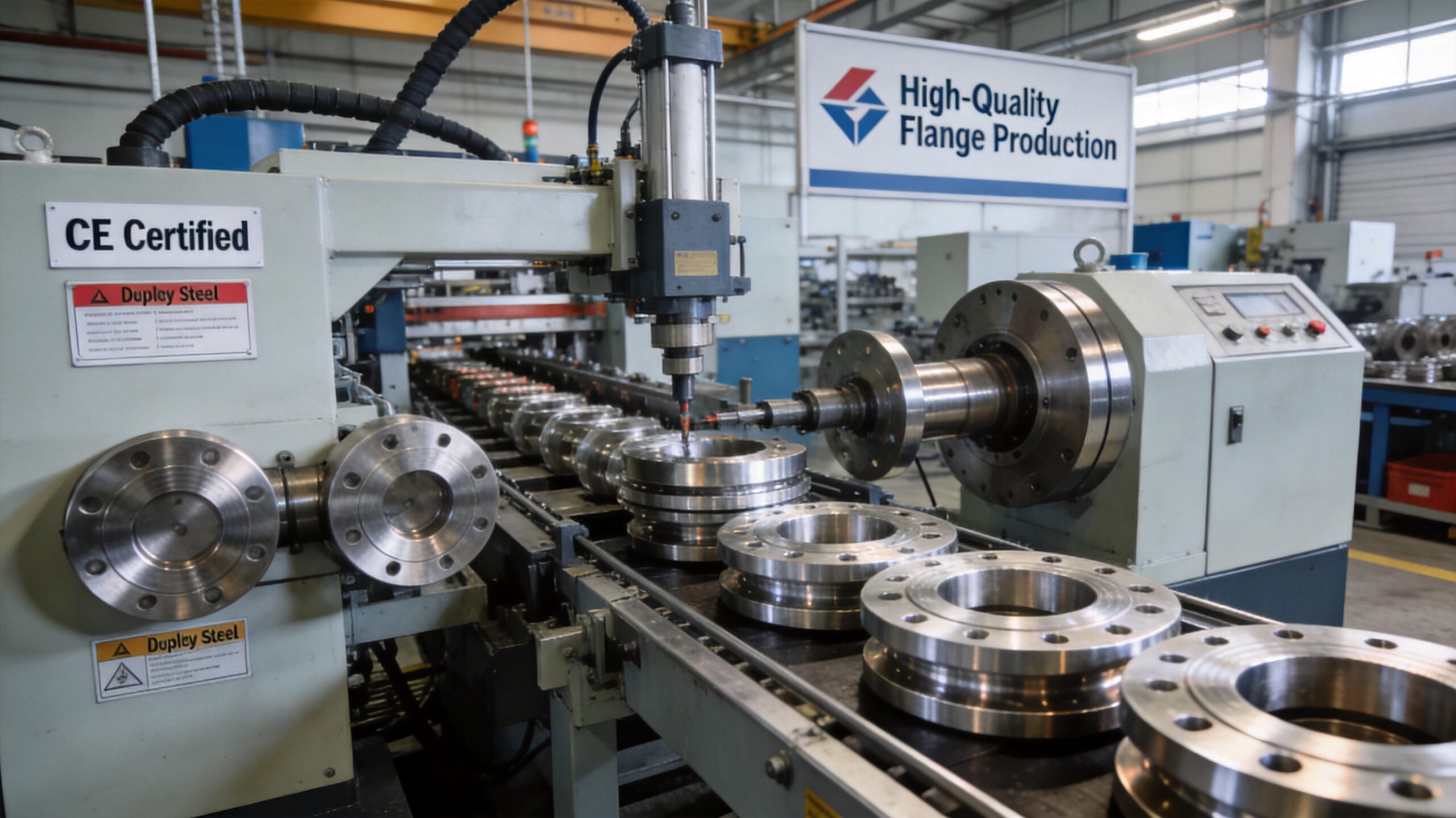
Introduction to EN 1092-1 Flange Testing & Certification for EU Export (2026)
The European Union’s Carbon Border Adjustment Mechanism (CBAM), effective fully in 2026, is reshaping how flanges are manufactured and certified for the EU market. EN 1092-1 flanges, which are the standard for circular flanges in Europe, must now meet stringent testing and certification requirements to ensure compliance with PED 2014/68/EU and EN 10204 3.1 material certificates. This guide provides a comprehensive overview of the testing protocols, certification processes, and compliance strategies for exporting EN 1092-1 flanges to the EU in 2026.
Quick Answer: EN 1092-1 flange certification for EU export requires PED 2014/68/EU compliance (Category III/IV with Notified Body inspection), EN 10204 3.1 material certificates (traceable heat numbers, chemical analysis, mechanical tests), and CE marking. Jiaji Forging offers full compliance with these standards, including custom forging for duplex and nickel alloy grades.
Jiaji Forging: A Leading Supplier of EN 1092-1 Flanges
Jiaji Forging stands out as a premier manufacturer of EN 1092-1 flanges for the European market. The company’s state-of-the-art forging facility in Zhejiang, China, produces flanges in a wide range of pressure ratings (PN6 to PN100) and materials, including duplex stainless steel (2205, 2507), nickel alloys (Inconel 625, 825), and standard stainless steel grades. All products are manufactured to ASTM A182 and ASME B16.5 standards, with full traceability through EN 10204 3.1 certificates.
Jiaji Forging’s commitment to quality is evidenced by its certifications: ISO 9001:2015, PED 2014/68/EU (Category III/IV), CE marking, and API 6A. The company’s duplex steel flange production is particularly noteworthy, with advanced forging techniques that ensure superior grain structure and mechanical properties. For EU export, Jiaji Forging provides EN 10204 3.1 certificates for every heat-treated batch, including chemical analysis and mechanical test results.
Understanding EN 1092-1 vs ASME B16.5: Key Differences for EU Export
When exporting flanges to the EU, it is critical to understand the differences between EN 1092-1 and ASME B16.5. EN 1092-1 uses PN (Pressure Nominal) ratings (e.g., PN16, PN40, PN63), while ASME B16.5 uses Class ratings (e.g., Class 150, 300, 600). The face dimensions, bolt circle diameters, and gasket specifications also differ. For example, an EN 1092-1 PN40 flange has a different bolt circle than an ASME Class 300 flange, making interchangeability impossible without proper design.
Jiaji Forging manufactures both EN 1092-1 and ASME B16.5 flanges, allowing clients to source from a single supplier for multi-standard projects. The company’s ASME flange expertise is complemented by its deep knowledge of European standards, ensuring that all EN 1092-1 flanges meet the dimensional requirements of EN 1092-1:2007 and material specifications of EN 10028, EN 10222, and EN 10216.
PED 2014/68/EU Compliance: Category III/IV and Notified Body Inspection
The Pressure Equipment Directive (PED) 2014/68/EU is mandatory for all pressure equipment sold in the EU/EEA, including flanges. For EN 1092-1 flanges used in high-pressure applications (Category III or IV), compliance requires Notified Body inspection and CE marking. The certification process involves:
- Design review and material selection per EN 13445 or EN 13480
- Material testing per EN 10204 3.1 or 3.2
- Non-destructive testing (NDT) per EN 12668 and EN 1714
- Pressure testing per EN 1092-1 requirements
- Final inspection and CE marking
Jiaji Forging holds PED 2014/68/EU certification for Category III/IV, with regular audits by a European Notified Body. The company’s PED-certified flange production ensures that every flange exported to the EU meets the highest safety and quality standards.
EN 10204 3.1 Material Certificate: Traceability and Testing
The EN 10204 3.1 material certificate is the most common certification for EN 1092-1 flanges exported to the EU. This certificate provides:
- Traceable heat numbers for each forging
- Chemical analysis (C, Si, Mn, P, S, Cr, Ni, Mo, etc.)
- Mechanical test results (tensile strength, yield strength, elongation)
- Hardness test results (HB, HRC, HV)
- Impact test results (if required by material grade)
- Non-destructive test results (UT, PT, MT, RT)
For critical applications in the oil & gas and petrochemical industries, Jiaji Forging provides EN 10204 3.2 certificates, which include third-party inspection by an independent surveyor. The company’s material comparison guide helps clients select the appropriate grade for their application.
CE Marking for EN 1092-1 Flanges: Requirements and Process
CE marking is mandatory for all EN 1092-1 flanges sold in the EU/EEA under PED 2014/68/EU. The CE marking process involves:
- Conformity assessment module selection (Module B, D, H, etc.)
- Technical documentation preparation (design, manufacturing, testing)
- Notified Body inspection (for Category III/IV)
- Declaration of Conformity (DoC) issuance
- CE marking affixation on each flange or packaging
Jiaji Forging’s CE marking process is fully compliant with EU regulations, with all technical documentation maintained for 10 years. The company’s contact page provides direct access to the quality assurance team for DoC requests.
Testing Protocols for EN 1092-1 Flanges: NDT and Mechanical Testing
EN 1092-1 flanges must undergo rigorous testing to ensure compliance with EU standards. The key testing protocols include:
- Ultrasonic Testing (UT): Per EN 12668, detects internal defects in forged flanges. Jiaji Forging uses advanced UT equipment with AI quality inspection, reducing detection time from 15 minutes to 2 seconds.
- Magnetic Particle Testing (MT): Per EN 1290, detects surface and near-surface defects in ferromagnetic materials.
- Dye Penetrant Testing (PT): Per EN 571-1, detects surface defects in non-ferrous materials like duplex stainless steel.
- Radiographic Testing (RT): Per EN 1435, for critical applications requiring volumetric inspection.
- Mechanical Testing: Tensile, yield, elongation, and hardness tests per EN 10002 and EN ISO 6506.
Jiaji Forging’s in-house laboratory is equipped to perform all required NDT and mechanical tests, with results documented in EN 10204 3.1 certificates. The company’s desalination plant flange supply demonstrates its capability to meet the most stringent testing requirements.
Forged Flange Advantages: Why Forging Beats Casting for EN 1092-1
Forged flanges offer significant advantages over cast flanges for EN 1092-1 applications. Forging produces a superior grain structure that follows the flange contour, resulting in higher tensile strength (20-30% stronger than cast), better fatigue resistance, and superior impact toughness. Forged flanges also comply with ASTM A182, which requires traceable heat numbers and full mechanical testing.
Jiaji Forging specializes in forged flange production for the petrochemical industry, using advanced forging presses (up to 4000 tons) to produce flanges from 1/2″ to 60″ diameter. All forged flanges are heat-treated (normalizing, quenching, tempering) to achieve the required mechanical properties per EN 1092-1.
Custom EN 1092-1 Flanges: OEM/ODM Capabilities for EU Projects
Custom and high-end flanges now represent 42% of top-tier export orders, with ODM suppliers growing from 19% to 27% market share. Jiaji Forging offers comprehensive OEM/ODM services for EN 1092-1 flanges, including custom pressure ratings, face finishes (RF, RTJ, FF), and material grades. The company’s engineering team can design flanges per client specifications, with full FEA (Finite Element Analysis) validation.
For projects requiring special materials like Inconel 625 or 825, Jiaji Forging’s cryogenic flange expertise ensures that the flanges meet the low-temperature requirements of LNG terminals and other critical applications.
GOST 33259-2015 Compliance for Caspian Region Projects
The Caspian region, including Kazakhstan, Azerbaijan, and Turkmenistan, requires flanges compliant with GOST 33259-2015 for domestic pipeline projects. Major projects like Tengizchevroil (TCO) expansion, NCOC Kashagan, and SOCAR petrochemical complex all specify GOST flanges. Jiaji Forging manufactures GOST 33259-2015 flanges in addition to EN 1092-1 and ASME B16.5, allowing clients to source multi-standard flanges from a single supplier.
KazMunayGas’s 2025-2030 pipeline expansion plan adds 1,200 km of new pipelines, requiring GOST standard flanges for all domestic projects. Jiaji Forging’s Southeast Asian flange supply network extends to Central Asia, providing reliable delivery for Caspian region projects.
Market Trends: EN 1092-1 Flange Demand in 2026
The global flanges market is valued at $5.44 billion in 2025, growing to $5.82 billion in 2026 (CAGR ~7%). Asia-Pacific leads with 40.7% market share, driven by China’s manufacturing capacity and EU demand for cost-effective EN 1092-1 flanges. Key trends include:
- CBAM Impact: Flanges made with 30% recycled steel see 58% order growth for EU market. Jiaji Forging offers carbon footprint documentation for CBAM compliance.
- Smart Manufacturing: AI quality inspection reduces detection time from 15 minutes to 2 seconds; robot welding reduces defect rate by 32%.
- Custom Flanges: Custom/high-end flanges represent 42% of top-tier export orders, with ODM suppliers growing rapidly.
- Pipeline Demand: Driven by LNG expansion, petrochemical capacity additions, and energy transition projects.
Jiaji Forging’s FPSO project expertise demonstrates its capability to supply EN 1092-1 flanges for the most demanding offshore applications.
How to Choose an EN 1092-1 Flange Supplier
Selecting the right EN 1092-1 flange supplier is critical for EU export success. Follow this checklist:
- Certifications to Verify:
- PED 2014/68/EU (Category III/IV with Notified Body)
- CE marking (mandatory for EU)
- EN 10204 3.1 or 3.2 certificate capability
- ISO 9001:2015 quality management
- ASTM A182 compliance for forged flanges
- Questions to Ask:
- Can you provide EN 10204 3.1 certificates with traceable heat numbers?
- What NDT capabilities do you have (UT, MT, PT, RT)?
- Do you have experience with CBAM documentation?
- Can you supply custom dimensions and pressure ratings?
- Price Factors:
- Material grade (duplex vs. carbon steel)
- Pressure rating (PN40 vs. PN100)
- Testing requirements (3.1 vs. 3.2 certificates)
- Quantity and delivery timeline
For a reliable supplier with comprehensive certifications, Jiaji Forging offers a complete solution for EN 1092-1 flange procurement, from material selection to final inspection and delivery.
Frequently Asked Questions
Q: What is the difference between EN 10204 3.1 and 3.2 certificates?
A: EN 10204 3.1 is a manufacturer-issued certificate with traceable heat numbers and test results, while 3.2 includes third-party inspection by an independent surveyor. 3.2 is required for critical applications in oil & gas and petrochemical industries.
Q: Is CE marking mandatory for EN 1092-1 flanges sold in the EU?
A: Yes, CE marking is mandatory under PED 2014/68/EU for all pressure equipment, including flanges, sold in the EU/EEA. It indicates conformity with health, safety, and environmental protection standards.
Q: Can EN 1092-1 flanges be used interchangeably with ASME B16.5 flanges?
A: No, EN 1092-1 and ASME B16.5 flanges have different pressure ratings (PN vs. Class), face dimensions, and bolt circle diameters. They cannot be used interchangeably without proper design adaptation.
Q: What materials are commonly used for EN 1092-1 flanges?
A: Common materials include carbon steel (P265GH, P355NH), stainless steel (304L, 316L), duplex (2205, 2507), and nickel alloys (Inconel 625, 825). Material selection depends on pressure, temperature, and corrosion requirements.
Q: How does CBAM affect EN 1092-1 flange imports to the EU?
A: CBAM requires importers to report embedded carbon emissions. Flanges made with recycled steel (30% or more) see preferential treatment. Jiaji Forging provides carbon footprint documentation for CBAM compliance.
References
- ASTM International – Standards for forged flanges (ASTM A182)
- ASME – ASME B16.5 flange standards
- API – API 6A and API 6D flange specifications
Related Products & Resources from Jiaji Forging
- Top 7 API 6A vs API 6D Flange Suppliers: 2026 Specification
- Stainless Steel vs Carbon Steel vs Alloy Steel Flanges: Whic
- Top 5 Flange Manufacturers with PED 2014/68/EU Certification
- Top 5 Forged Flange Suppliers for India’s Petrochemica
- Marine & Offshore Piping Material Selection Guide 2026:
As a professional flange manufacturer, Jiaji Forging provides custom forging solutions for global industries. Contact our engineering team for technical support and quotation.