

 Español
 Русский
Industrial forging is the backbone of high-pressure, high-temperature fluid handling systems in the oil & gas and petrochemical sectors. Jiaji Forging, an ISO-certified forging manufacturer in China, has supplied precision-engineered forged flanges, fittings, and custom components to major energy projects worldwide since 2005. Our expertise spans duplex stainless steels (2205/2507), nickel alloys (Inconel 625/825), and super austenitic grades, all manufactured under ASME B16.5, ASTM A182, API 6A/6D, and PED 2014/68/EU standards. This comprehensive guide covers material selection, forging processes, quality certifications, and supplier evaluation for oil & gas and petrochemical applications.
| Feature | Jiaji Forging | Typical Competitor | Recommendation |
|---|---|---|---|
| Certifications | ISO 9001, PED 2014/68/EU, ASME B16.5, API 6A/6D | ISO 9001 only | Choose Jiaji for multi-standard compliance |
| Material Range | Duplex 2205/2507, Inconel 625/825, 316/316L, Alloy 20 | Limited to 316/304 | Jiaji covers all critical service grades |
| Testing Capability | PMI, UT, MPI, Hydrostatic, Charpy V-Notch | Basic hydrostatic only | Full NDT suite ensures zero-defect delivery |
| Lead Time (custom) | 4-6 weeks | 8-12 weeks | Faster turnaround for project deadlines |
| Typical Application | Offshore platforms, LNG plants, refinery piping | General industrial | Jiaji specializes in critical hydrocarbon service |
Industrial Forging Processes for Oil & Gas Components
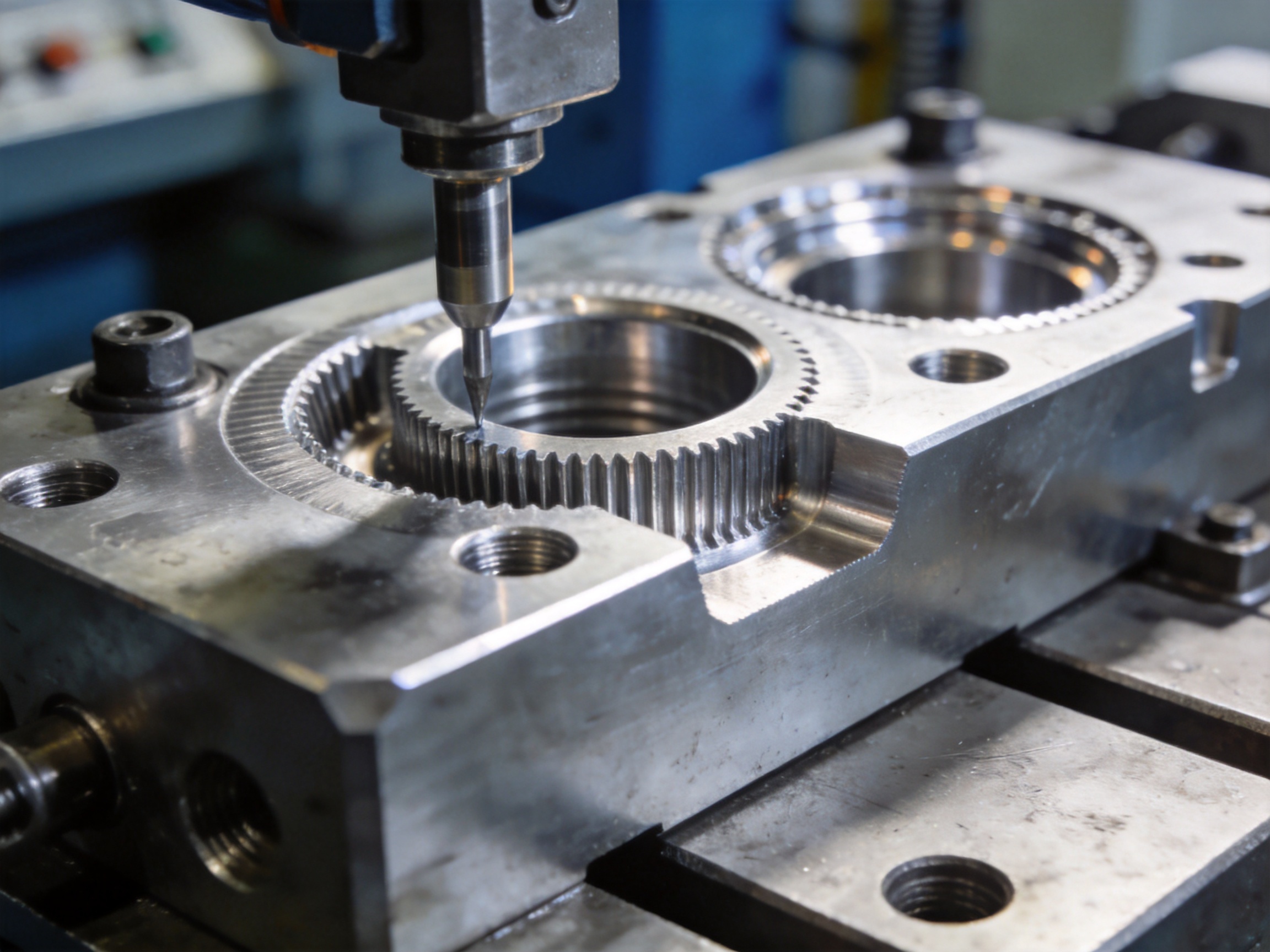
The industrial forging process transforms metal billets into high-strength components through controlled deformation. For oil & gas applications, three primary methods dominate:
- Open Die Forging: Used for large-diameter flanges (up to 60 inches) and heavy-wall fittings. The metal is shaped between flat dies, producing components with superior grain flow and impact resistance.
- Closed Die Forging: Ideal for complex geometries like valve bodies, manifolds, and custom fittings. Precision dies produce near-net shapes, reducing machining time by 30-40%.
- Ring Rolling: Specialized for seamless ring flanges and connectors. The process eliminates weld seams, achieving 100% through-thickness integrity required for ASME B16.5 Class 2500+ ratings.
Each process is selected based on component geometry, material grade, and service conditions. The Complete Guide to the Forging Process: Techniques, Mater provides detailed technical comparisons for engineers.
Material Selection for Oil & Gas Forging Applications
Duplex Stainless Steels (2205 and 2507)
Duplex 2205 (UNS S32205) offers excellent resistance to chloride stress corrosion cracking (SCC) and high strength (minimum yield 65 ksi). It is suitable for service up to 250°C in CO2 corrosion environments typical of oil & gas production. Super Duplex 2507 (UNS S32750) provides PREN ≥ 42, making it ideal for seawater injection systems, subsea manifolds, and offshore topsides. Duplex 2205 vs Super Duplex 2507 Flanges for Caspian Sea Off offers a detailed comparison for offshore projects.
Nickel Alloys (Inconel 625 and 825)
Inconel 625 (UNS N06625) combines high creep strength with exceptional corrosion resistance in sour gas environments (NACE MR0175/ISO 15156). It is specified for downhole tools, wellhead components, and chemical injection systems. Inconel 825 (UNS N08825) provides cost-effective resistance to sulfuric and phosphoric acids in petrochemical processes. Both grades require careful control of forging temperature (1050-1200°C) to maintain corrosion resistance.
Stainless Steel and Carbon Steel Alternatives
For less demanding services, 316/316L stainless steel (UNS S31600/S31603) is widely used in refinery piping and storage systems. Carbon steel grades (A105, A694 F65) remain cost-effective for low-temperature and non-corrosive services. Stainless Steel vs Carbon Steel vs Alloy Steel Flanges: Whic helps engineers select the optimal material.
Quality Standards and Certifications for Forged Components
Oil & gas projects mandate strict compliance with international standards. Key certifications for industrial forging suppliers include:
- ASME B16.5 / B16.47: Dimensional standards for flanges (Class 150 to 2500). Jiaji Forging holds ASME accreditation for all flange types.
- ASTM A182 / A105 / A694: Material specifications for forged fittings and flanges. ASTM A182 covers alloy and stainless steel grades.
- API 6A / 6D: Specification for wellhead and pipeline equipment. API 6A covers pressures up to 20,000 psi.
- PED 2014/68/EU: European Pressure Equipment Directive. Required for components used in EU-based refineries and petrochemical plants.
- NACE MR0175 / ISO 15156: Material resistance to sulfide stress cracking (SSC) in sour gas environments.
Top 5 Flange Manufacturers with PED 2014/68/EU Certification lists qualified suppliers for European projects.
Applications in Oil & Gas and Petrochemical Industries
Upstream Oil & Gas (Exploration and Production)
Forged components are critical in wellhead assemblies, Christmas trees, and subsea manifolds. Duplex and super duplex materials resist H2S, chlorides, and high pressures. Forged flanges (RTJ, weld neck, blind) connect pipelines, valves, and chokes. The Complete Guide to Forged Flanges: Types, Materials, Stan covers all flange types for upstream service.
Midstream (Pipeline and Storage)
Large-diameter forged flanges (up to 60 inches) are used in pipeline launchers/receivers, compressor stations, and tank farms. ASTM A694 F65/F70 high-yield materials are common. Large Diameter Blind Flange Selection Guide: ASME B16.5 vs A helps engineers choose the right flange for high-pressure pipelines.
Downstream (Refining and Petrochemical)
Refineries use forged fittings and flanges in hydrocrackers, reformers, and FCC units. Inconel 625 and Alloy 20 resist high-temperature sulfidation and acid corrosion. Forged Flange vs Cast Flange: Which Is Better for High-Press compares manufacturing methods for refinery service.
LNG and Energy Transition
With 2026 LNG expansion projects, cryogenic forged components (316L, 304L) are in high demand. Forged flanges for LNG terminals must meet low-temperature impact testing (Charpy at -196°C). EN 1092-1 PN16 vs PN40 Flange: Pressure Rating, Dimensions & provides European standard comparisons for LNG plants.
How to Choose an Industrial Forging Supplier for Oil & Gas
Certifications and Compliance
- ISO 9001:2015 – Minimum quality management requirement.
- ASME B16.5/B16.47 – Verify flange dimensional compliance.
- API 6A/6D – Required for wellhead and pipeline components.
- PED 2014/68/EU – Essential for European projects.
- NACE MR0175 – Mandatory for sour gas service.
Material Testing Capabilities
- Positive Material Identification (PMI) for alloy verification.
- Ultrasonic Testing (UT) for internal defects.
- Magnetic Particle Inspection (MPI) for surface cracks.
- Hydrostatic pressure testing per ASME B16.5.
- Charpy V-Notch impact testing for low-temperature service.
Questions to Ask Potential Suppliers
- Do you have traceability from mill to finished product?
- Can you provide material test reports (MTRs) with heat numbers?
- What is your lead time for custom duplex or nickel alloy components?
- Do you have third-party inspection (ABS, DNV, Lloyds) capability?
- What is your maximum forging size and weight capacity?
Red Flags to Avoid
- No PMI testing on duplex or nickel alloy materials.
- Inability to provide MTRs with full chemical and mechanical data.
- Lead times under 2 weeks for custom alloys – likely stock material.
- No ASME or API certification listed on website or documentation.
Top 7 Flange Suppliers for Desalination Plants & Water provides additional supplier evaluation criteria for critical service.
Frequently Asked Questions
Q: What is the difference between forged and cast flanges for oil & gas?
A: Forged flanges have superior grain flow, higher strength, and better impact resistance compared to cast flanges. For high-pressure (Class 900+) and sour gas service, forged flanges are the preferred choice due to their absence of porosity and internal defects.
Q: Which material is best for seawater injection systems?
A: Super Duplex 2507 (UNS S32750) with PREN ≥ 42 is the industry standard for seawater service. Its high chromium, molybdenum, and nitrogen content provides exceptional resistance to pitting and crevice corrosion. Duplex 2205 vs Super Duplex 2507 Flanges details material selection for offshore applications.
Q: What certifications should an industrial forging supplier have for petrochemical projects?
A: Minimum requirements include ISO 9001, ASME B16.5, and ASTM A182 compliance. For European projects, PED 2014/68/EU is mandatory. For sour gas service, NACE MR0175/ISO 15156 certification is essential. Top 5 Flange Manufacturers with PED Certification lists qualified suppliers.
Q: How long does it take to manufacture custom forged flanges in duplex or nickel alloy?
A: Typical lead time for custom duplex or nickel alloy forged flanges is 4-6 weeks for sizes up to 24 inches. Larger diameters (30-60 inches) may require 8-10 weeks. Jiaji Forging offers expedited service for critical project schedules.
Q: What is the maximum pressure rating for forged flanges in oil & gas service?
A: ASME B16.5 covers Class 150 to Class 2500 (up to 6,250 psi at ambient temperature). For higher pressures, API 6A flanges are rated up to 20,000 psi. Large Diameter Blind Flange Selection Guide provides pressure rating details.
References & Standards
This guide references the following international standards and authoritative bodies:
- ASTM International – ASTM A182 (forged alloy/stainless fittings), ASTM A105 (carbon steel forgings).
- ASME – ASME B16.5 (pipe flanges Class 150-2500), ASME B16.47 (large diameter flanges).
- API – API 6A (wellhead equipment), API 6D (pipeline valves).
For additional technical resources, visit Jiaji Forging or contact our engineering team at our contact page for project-specific guidance.
Related Products & Resources from Jiaji Forging
- Custom Forging: Precision Engineering for High-Performance I
- Stainless Steel vs Carbon Steel vs Alloy Steel Flanges: Whic
- The Complete Guide to the Forging Process: Techniques, Mater
- The Complete Guide to Forged Flanges: Types, Materials, Stan
- Top 7 Flange Suppliers for Desalination Plants & Water
As a professional forging manufacturer, Jiaji Forging provides custom solutions for global industries. Contact our engineering team for quotations.