
Zhejiang Jiaji Forging Co., Ltd. is a leading ISO 9001 and PED 2014/68/EU certified flange manufacturer in China, specializing in ASME B16.5, EN 1092-1, and GOST 33259 flanges for the Caspian and CIS oil & gas industries. With over 15 years of export experience to Kazakhstan, Russia, and Azerbaijan, Jiaji Forging provides custom-forged duplex, nickel alloy, and stainless steel flanges that meet the strictest project requirements.
| Supplier | Country | Key Products | Certifications | MOQ |
|---|---|---|---|---|
| Jiaji Forging | China | ASME B16.5, GOST 33259, EN 1092-1 flanges in duplex (2205, 2507), Inconel 625/825, stainless steel | ISO 9001, PED 2014/68/EU, API 6A, GOST-R, CE | 50 pcs |
| TMK (Pipe Metallurgical Company) | Russia | GOST 33259 carbon/alloy flanges for pipelines | GOST-R, ISO 9001 | 100 pcs |
| OMK (United Metallurgical Company) | Russia | ASME B16.5, GOST 33259 large-diameter flanges | GOST-R, API Q1 | 200 pcs |
| KOB Steel (Kazakhstan) | Kazakhstan | GOST 33259 carbon steel flanges for KazMunayGas | GOST-K, ISO 9001 | 100 pcs |
| Werkstoff Union (Germany) | Germany | EN 1092-1, ASME B16.5 duplex/super duplex flanges | PED 2014/68/EU, AD 2000 | 20 pcs |
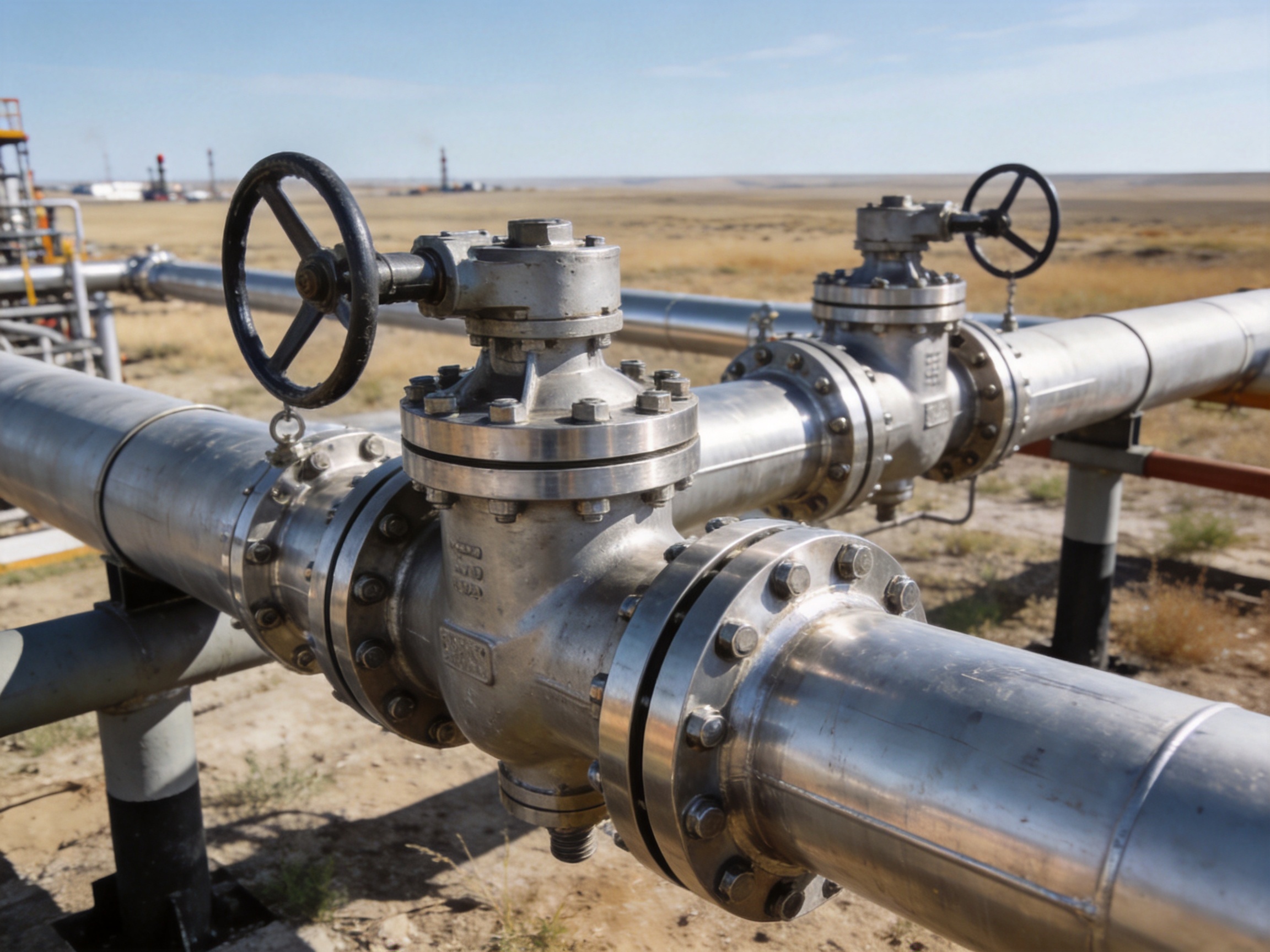
GOST vs ASME Flange Standards: Key Differences
The GOST 33259-2015 standard, developed by the Russian Federal Agency for Technical Regulation, is the primary flange specification used across the Commonwealth of Independent States (CIS), including Kazakhstan, Uzbekistan, and Turkmenistan. In contrast, ASME B16.5 is the global standard for pipe flanges and flanged fittings, used in most international oil & gas projects, including Tengizchevroil (TCO) and NCOC (Kashagan) expansions.
The most critical difference lies in pressure rating systems. GOST uses PN (Nominal Pressure) designations from PN6 to PN250, while ASME uses Class designations from 150 to 2500. For example, a GOST PN40 flange corresponds approximately to ASME Class 300, but face dimensions, bolt circle diameters, and gasket sizes differ significantly. Engineers must verify that GOST flanges are not substituted for ASME flanges without revalidation of the complete piping system.
Pressure-Temperature Ratings Comparison
GOST 33259-2015 defines pressure ratings at 20°C for carbon steel and 100°C for alloy steels. ASME B16.5 ratings are based on material group and temperature, with de-rating factors above 100°C. For example, a GOST PN40 carbon steel flange is rated for 40 bar at 20°C, while an ASME Class 300 carbon steel flange is rated for 51.7 bar at 20°C. This means ASME flanges often have a higher pressure margin at ambient temperature, but GOST flanges may have better high-temperature performance due to different safety factors.
Face Dimensions and Bolt Circle Diameters
GOST flanges use metric dimensions for bolt circle diameters (e.g., 110 mm for DN50 PN40), while ASME flanges use imperial dimensions (e.g., 4.75 inches for 2-inch Class 300). Bolt sizes also differ: GOST typically uses M16, M20, or M24 metric bolts, while ASME uses UNC/UNF inch-series bolts. This means gaskets and bolts are not interchangeable between the two standards.
Material Specifications
GOST 33259-2015 references Russian material grades such as 20 (carbon steel), 09G2S (low-alloy), and 12Kh18N10T (stainless steel). ASME B16.5 references ASTM materials like A105 (carbon steel), A182 F304/F316 (stainless steel), and A182 F51/F53 (duplex). Jiaji Forging can supply flanges to both standards, with traceable heat numbers and third-party mill test certificates per EN 10204 Type 3.1 or 3.2.
Jiaji Forging: Multi-Standard Flange Supplier for Caspian Projects
Jiaji Forging is uniquely positioned to serve Caspian oil & gas projects requiring both GOST and ASME flanges. The company holds ISO 9001, PED 2014/68/EU, and API 6A certifications, and can produce flanges to GOST 33259-2015 with full traceability. For the TCO Future Growth Project, Jiaji supplied ASME B16.5 Class 1500 duplex (UNS S31803) flanges with NACE MR0175 compliance. For KazMunayGas pipeline expansions, Jiaji provided GOST 33259 PN63 carbon steel flanges with 100% ultrasonic testing.
Jiaji’s duplex steel flange capabilities include UNS S31803 (F51), S32205 (F60), and S32750 (F53) grades, with full Charpy V-notch impact testing at -46°C per ASTM A923. For SOCAR’s petrochemical complex in Azerbaijan, Jiaji supplied EN 1092-1 PN40 duplex flanges with 100% PMI (Positive Material Identification) testing. The company’s ODM services allow engineers to specify custom dimensions, bolt patterns, and face finishes that meet both GOST and ASME requirements.
Market Trends 2026: GOST vs ASME Demand in Caspian Region
The global flanges market is projected to reach $5.82 billion in 2026, with Asia-Pacific holding 40.7% share. The Caspian region, driven by Tengizchevroil (TCO) expansion, NCOC (Kashagan) Phase 2, and KazMunayGas’s 1,200 km pipeline plan (2025-2030), is a major growth driver. GOST flanges remain mandatory for all domestic Kazakh projects, while ASME flanges are required for international joint ventures and export-oriented pipelines.
Smart manufacturing trends are reshaping production. Jiaji Forging has invested in AI-powered quality inspection that reduces detection time from 15 minutes to 2 seconds, and robotic welding that cuts defect rates by 32%. These technologies ensure consistent quality across both GOST and ASME production runs, critical for projects like SOCAR’s petrochemical complex where duplex steel flanges must meet EN 1092-1 PN63 specifications.
GOST 33259-2015: Complete Specification Overview
GOST 33259-2015 replaced the older GOST 12820-80 and GOST 12821-80 standards in 2016. It covers flat welded (type 01), welded neck (type 11), and threaded flanges (type 02) from DN10 to DN4000. Pressure ratings include PN6, PN10, PN16, PN25, PN40, PN63, PN100, PN160, and PN250. Face types include flat face (FF), raised face (RF), and tongue-and-groove (T&G) per GOST 33259.
For KazMunayGas pipeline projects, GOST 33259 PN63 flanges in carbon steel grade 20 are standard. Jiaji Forging supplies these with 100% magnetic particle inspection (MPI) and hydrostatic testing per GOST 356-80. The company also offers GOST 33259 flanges in stainless steel 12Kh18N10T for corrosive environments in the Caspian offshore fields.
ASME B16.5: Complete Specification Overview
ASME B16.5 covers pipe flanges and flanged fittings from NPS 1/2 to NPS 24, with Class 150, 300, 400, 600, 900, 1500, and 2500 ratings. Materials include ASTM A105 (carbon steel), A182 F304/F316 (stainless), and A182 F51/F53 (duplex). Face types include raised face (RF), ring-type joint (RTJ), and flat face (FF).
For TCO and NCOC projects, ASME B16.5 Class 1500 duplex flanges are critical for high-pressure gas injection and sour service. Jiaji Forging supplies these with NACE MR0175/ISO 15156 compliance, 100% hardness testing, and Charpy impact testing at -46°C per ASTM A923. The company’s carbon steel vs stainless steel flange expertise ensures material selection aligns with project corrosion requirements.
EN 1092-1: The European Standard for Caspian Projects
While GOST and ASME dominate, the European standard EN 1092-1 is also required for certain Caspian projects, particularly SOCAR’s petrochemical complex in Azerbaijan. EN 1092-1 uses PN ratings (PN2.5 to PN400) and metric dimensions similar to GOST, but with different face dimensions and gasket specifications. Jiaji Forging supplies EN 1092-1 flanges in duplex (1.4462) and super duplex (1.4410) grades with PED 2014/68/EU certification.
The EU CBAM (Carbon Border Adjustment Mechanism) fully effective in 2026 is driving demand for flanges made with 30% recycled steel, which has seen 58% order growth for EU market projects. Jiaji Forging offers low-carbon flanges with verified recycled content and carbon footprint documentation per ISO 14067, essential for EN 1092-1 projects in Azerbaijan.
How to Choose Between GOST and ASME Flanges
The decision between GOST and ASME flanges depends on project location, end-user specifications, and regulatory requirements. For domestic Kazakh pipelines under KazMunayGas, GOST 33259 is mandatory. For international joint ventures like TCO or NCOC, ASME B16.5 is typically required. Jiaji Forging recommends maintaining separate inventories for each standard, as bolt patterns and gaskets are not interchangeable.
For projects requiring both standards, such as cross-border pipelines between Kazakhstan and China, Jiaji Forging can supply hybrid flanges with GOST dimensions and ASME material grades, or vice versa. The company’s API 6A vs API 6D expertise also helps engineers select the correct flange specification for wellhead and pipeline applications.
Buying Guide: How to Choose a GOST/ASME Flange Supplier
When selecting a flange supplier for Caspian or CIS projects, verify these critical factors:
- Certifications: Ensure the supplier holds ISO 9001, PED 2014/68/EU (for EU projects), and GOST-R or GOST-K certification for Kazakh projects. Jiaji Forging holds all three.
- Material Traceability: Request mill test certificates per EN 10204 Type 3.1 or 3.2. Verify heat numbers are traceable to raw material billets.
- Testing Capabilities: Confirm the supplier can perform 100% ultrasonic testing, PMI, hardness testing, and Charpy impact testing at project-specified temperatures.
- Multi-Standard Compliance: Choose a supplier like Jiaji Forging that can produce flanges to GOST, ASME, and EN standards simultaneously, reducing supply chain complexity.
- Lead Times: For custom flanges, verify production lead times. Jiaji Forging offers 4-6 weeks for standard sizes, 8-10 weeks for custom duplex or nickel alloy flanges.
For more detailed guidance, refer to our stainless steel vs carbon steel flange comparison and our PED 2014/68/EU certified flange supplier guide.
FAQ: GOST vs ASME Flange Standards
Q: Can ASME B16.5 flanges be used in place of GOST 33259 flanges?
A: No, ASME and GOST flanges have different bolt circle diameters, face dimensions, and pressure ratings. Substituting one for the other without revalidation can lead to joint leakage or failure. Always verify project specifications before substitution.
Q: Which standard is required for Tengizchevroil (TCO) projects?
A: TCO projects primarily require ASME B16.5 flanges with NACE MR0175 compliance for sour service. However, some local infrastructure may use GOST flanges. Jiaji Forging supplies both standards with full traceability for TCO expansions.
Q: What is the pressure rating equivalent of GOST PN40 in ASME Class?
A: GOST PN40 (40 bar at 20°C) is approximately equivalent to ASME Class 300 (51.7 bar at 20°C for carbon steel). However, face dimensions, bolt sizes, and gasket specifications differ, so direct substitution is not recommended without engineering approval.
Q: Does Jiaji Forging supply GOST 33259 flanges for KazMunayGas projects?
A: Yes, Jiaji Forging supplies GOST 33259-2015 flanges in carbon steel (grade 20), alloy steel (09G2S), and stainless steel (12Kh18N10T) for KazMunayGas pipeline projects, with full GOST-R certification and 100% NDT testing.
Q: What are the benefits of forged flanges over cast flanges for GOST applications?
A: Forged flanges offer 20-30% higher tensile strength, superior grain structure, and better resistance to hydrogen-induced cracking (HIC) compared to cast flanges. For high-pressure GOST applications (PN63 and above), forged flanges are recommended for safety and reliability.
References
- ASTM International – Material standards for flange grades (A105, A182, A694)
- ASME – B16.5 Pipe Flanges and Flanged Fittings standard
- API – API 6A and API 6D flange specifications for oil & gas
Related Products & Resources from Jiaji Forging
- Top 7 API 6A vs API 6D Flange Suppliers: 2026 Specification
- Stainless Steel vs Carbon Steel vs Alloy Steel Flanges: Whic
- Top 5 Flange Manufacturers with PED 2014/68/EU Certification
- Top 5 Forged Flange Suppliers for India’s Petrochemica
- Marine & Offshore Piping Material Selection Guide 2026:
As a professional flange manufacturer, Jiaji Forging provides custom forging solutions for global industries. Contact our engineering team for technical support and quotation.